“This is Panarchy, Man!”
[…more forthcoming.]
“This is Panarchy, Man!”
[…more forthcoming.]
Poem for the Right and for the Wrong
In the Spring
everything is names
and numbers
messages sent
at the same time
and the way
the most simple ‘hello’
can sound so familiar
when I’m on my porch
alone
for all of May
with the songs
about songs
saying something
about turning
my back
on a friend
and me trying to figure
who I was turning on more
after all was said
with not much done
it was only me
alone on my porch
in spite of
that white bird
that blue shirt
all of this after
the long slow thaw
and how we danced
through those months
of too-short days
there’s no such thing
as wasted time
and even though
I never did find out
if you could slow down
the clock
I don’t believe
in broken hearts anymore
not on days like this
with everything so hot
like blood in the sun
and so much living and dying
while the grass just keeps on
growing
and the clouds
look like they’re trying
to rain
I’ll just keep telling the story
of the two copperheads
that my father killed
in the woodpile on a Sunday
while the pear trees
smelled like sex
and the bees buzzed on
like it was nothing
like it was nothing
like it was nothing
under those skies
on that finally quiet day
in June
when it just didn’t matter
all that much
anymore
what I claimed to choose.
Unsculpture
Today, without ceremony,
sans sentiment
I tore down the Hand of God
(untitled)
or at least started to anyway,
I left the frame
for another day,
another afternoon.
Unremarkable,
just cleaning up
an old mess I made.
Broken glass and the rust
of a yesteryear righteousness
the chicken wire
drawing blood
the hardware cloth
the nails
in a skeleton
of rotted wood
there in the Northwest corner
of my yard
which was,
years ago,
a beautiful place
and is still a beautiful place
though in a different way,
a far more moldering way.
Today, without ceremony,
without a single photo,
I peeled away the splintering waves
pushed the boat from where it sailed
atop the frame
and felt pleased
when it shuddered and cracked
upon hitting the ground
tearing a limb from the maple
as it fell,
in a great feat
reversed.
I pushed down
what I had once pushed up
and the children were just as delighted
to see it destroyed,
as they were when I raised it from the ground,
over my head,
and pushed, pushed,
up toward the sky.
“This is fun,” my son called,
as he smashed the boat apart
there on the muddy ground,
without ceremony.
Formation Song
These raindrops,
half-hearted until I really listened,
sound out a serious rhythm
a march to war,
a grand rally,
a big game
something more important than anything
that this day
just beginning – damp and lazy,
would seem to have in its plans
But, on the old metal sawhorse
whose only work now
is to patiently hold back the Calycanthus
and to slowly rust
in the corner of the yard
a movement is mounting
a syncopation found
in the hapless fall of water
being pulled back into the earth
doing the only thing it can do
when it finds the edge of the roof
which is to dumbly drop
with no knowing and no intent
And, oh, surprise
it becomes
a battle hymn
steady and certain
for this morning that is full
of quiet, whole-hearted falls
and almost unnoticeable journeys
back to where we belong.
An Imperfect Sonnet for a Dying Mother
How can I tell you, my dying mother
that you will turn to a bright comet soul
upon death, when the body becomes other
a wish to stay is the most futile goal
Your gaze to the edge of the field is long
hands clasped tightly, holding luminous ropes
“What?” she says, “I will miss life. Is that wrong?”
the mortal’s love spans all lands of false hopes
Yet, I am certain that with final breath
you will see, your eyes untethered at last
it’s true: the dead miss nothing upon death
we all become like comets, light and fast
The falling star does not cling to the night
even unseen, it shines then dies bright
To say you are the bones of your old hands
metacarpals, nails bent, a dying liver
the blood and substance of ancestral lands
in veins that cross flesh branched as a river
to call yourself by the knots of your spine
looking in the mirror at the face you know
not catching reflections, simple lines
the arrow fallen away from the bow
You are convinced that the name they gave you
bundled mass of cells and new beating heart
is somehow yours eternal and most true
from which you can and never will part
Your real name is a whisper on warm wind
The Scientist’s Lobotomy
Did you look inside her
at that place
where you imagined
all those demons, that disease?
Was she split open
like a shell
for its soft fruit
to be examined
by the stainless tines
of science?
What did you find, in that shimmering inside?
Was it not so dark as you thought it might be?
Did you see, there in the folds, the pits that you pictured?
Did you find
what you expected
empires of rot and lesion?
Did you swim
in the swamps
tucked into the coasts between
this region and that region,
get lost in the tangles
like cities on a roadmap?
Or was it softer, smoother…perfect?
Did the gentle pink edge remind you of a shell
that you once picked up from the shallows of the ocean?
Did the salt on your lips taste like waves?
There were patterns in the sand and you traced them
as mountains.
You saw the pools, your eyes reflected against the sky reflected …and you knew the truth.
You found it in that shell that held the sunset.
That soft slick pink and bruise
of grey and blue
that felt, to you,
soft like your mother
could never be.
For a moment, the whole world was there
and your finger felt
the sound inside
like music.
It’s so easy to forget
that you wanted to live
inside that place
where the ocean roared
against your ear
for you alone to hear.
When you looked inside
did you see
the landscape of her memory?
Was the universe in there?
Did it look like sand?
…or just a small segment
of tissue asleep
that you carved out
and placed on a scale,
as though this matter
could be weighed?
Was it barely alive at all?
Tell me, what was the smell of her,
in that deep
dark opening
that you made?
Did you find, tucked into a crenellated warmth,
the place where her voice
was born?
You never heard it.
She never spoke.
You never listened?
You’ve forgotten
which came first and what it was
that you were looking for
in the first place
in that space
behind her closed eyes.
Do you see that, even sleeping, her mouth looks like a bow?
You have no way of knowing
that as a child
she sang the same song
over and over again
because it made her happy,
made her heart lift up to the clouds,
spirits spinning melody.
Tell me, when you pulled
the two halves apart
did they make
any noise at all?
Tell me, what did you see inside?
Did you find God?
…or did God find you?
F.R. Rhyne (2019-2020)
1 – 8, Speech
roll your tongue, pushing
pulling air into your lungs
spitting out the truth
It sounds like, “Ahem,”
“Hmmm,” “Uhhhhh,” “Ungh,” “Ach,” “I…don’t know…”
how to speak it clear…
a quiet phrasing
sun scent of warming grasses
softer expression
thin reed whistle sound
pitched like the tilt of a bird’s wing
cutting bright air clean
comes as a stumble
breaking wavelet memory
grit of sand, breadfruit
warmly sticky hands
fatigue of dirt road laughing
symphony at night
sour sweet brother breath
heavy sigh as puppies sleep
adults speaking low
almost separate
a photograph held lightly
“Was this us? Really?”
9 – 12, Before Time
…there are no word-sounds
for the beginning movements,
before anything
What was there? Expanse?
Just a void-full vacuum space?
An empty socket?
There can be no wind,
if nothing moves a muscle.
No wind, no muscles.
so conspicuous,
the absence of everything
we might call ‘alive’
13 – 17, Melding
arrangements were made
atom configurations
created the spark
Ain’t got a name, no
or a mind like our new minds
no sense of itself
no imagined time
or knowledge of space beyond
nothing but knowing
Knowing not like us,
but, moving without effort
without intention
The sweetest pulling
elemental attraction
bonds beyond breaking
18, Initial Questions
Was there a whisper,
a murmuring in the dark?
Did the first cells sigh?
19 – 23, Utterances
beautiful, we were
in all the ways we have been
alive and dying
The snow and ice
the fires and beasts, new life
not knowing what comes
oh, to remember
that the world was here before
we discovered names
…all so long ago,
there is no one who can tell,
can’t speak that story.
silent origins
are not soundless, listen here:
speech without talking
25 – 28, Without Knowing
bromeliads grew
and the lizards sprouted wings
it took a good while
before winding clocks
or any imagining
of long nighttime hours
slow living and death
just as daily as it is now
without knowing time
there was no distance
no measurement of the miles
nothing had a name
29, Truth
the land was nameless
there was no way to say ‘home’
no one to say ‘home’
30 – 33, Innation
all creatures know, tho’…
creation lessons taught them
where they can survive
all things born knowing
what they crave and what they fear
DNA knowledge
To run, to jump, dig
to eat grubs, seeds, fish, algae
to keep on living
Pituitary
endocrine and thyroid gland
signaling us: Grow.
34 – 35, 4 Ws
We learn as we go
the sourness and sickness,
the sweetness and warmth
we thrive or falter
depending on when and where
who, what we are born
36, Truth (2)
for some of us here
life is a slow-blinking eye
over and done, gone
37 – 40, Instinct
the first words were grunts
howls, songs sung without singing
the scream of murder
storms were almighty
new hominids had no gods
death-fear was instinct
the striving of life
required no will at all
it was natural
To seek out food, hunt
to gather, drink water from leaves
these were not choices
41, Truth(3)
oceans did not choose
the rhythm of tidal flow
rain falls without choice
42 – 46, Anthro
afarensis, comprende?
Australopithecus, yo?
Old Lucy no se
it became a job
to dig up hundreds of bones
study the fragments
unearth the sacred
Use the most delicate brush
remove dirt from teeth
Lay out the bodies
rib cage, femur, mandible
marvel at the skulls
Ethiopia
Tanzania, Olduvai
footprints left in ash
47 – 50, Naming
our ancestors died
howling in the flaming heat
without knowing death
Homo habilis
Long prior to the Maasai
Place of wild sisal
The Great Rift Valley
one million years ago, man
Kariandusi
These are made up names
for places we claim to know
as ours to lay claim
51 – 54, History
Thick walls enclosing
the city-town of Jericho…
why did they need walls?
Catal Huyuk held
spaces for worship, women
made of stone and clay
Organized villages
created special labors
jobs and roles, talents
Tasks took on value
products emerged in surplus
trade began, tribes fought
55 – 57, In Modern Rendition
How does this show up
thousands of years later?
Colonial turf wars
even kids know it
colors become codified
Street sign boundaries
Elder mothers mourn
keep their own pistols loaded
Please God, watch over us.
58 – 61, of Weaponry
The earliest tools
were not made of rock and sharp bone
clawed hands were weapons
Closing into fists
strong, rough like worn-out leather
Dirt under broken nail
Never enough food
Had to learn to kill a deer
Satisfy hunger
The thrill of the hunt
predatory lust writ deep
makes human hearts beat
62 – 66, Where We Came…
go to the river
each day, every morning
wash away the blood
tell us the story
of the animals’ escape
speak in native tongue
myths of creation
shape the world as we see it
center us or them
have to be careful
of the tales we tell children
about who they are
Where did we come from?
Not our bodies, our cells, bones –
the naming of us.
67 – 70, From
Judaculla’s rock
sits speaking in the forest
speaks silent under trees.
Spelling a story
lines cut into the hard rock
for the future ones
Maps are like stories,
stories are like maps, like guides
telling us the way
Children taking turns
wander through woods far from home
name them “good” or “bad”
71 – 78, Prior
There were buffalo
clear to the ocean, huge herds
land belonged to them
This place was their home
the fields and the valley grass
their bones are still here
The water flowing
here, right on through the mountains
thousands of years old
mountains were jagged
Earth slamming into itself
rocks jutting from collisions
Broken pottery
found in the soil below banks
worn smooth at the edges
the flow of the streams
in places now dry, barren
written as ridges
From above, the lines
look just like your fingerprints
swirled sand beaches
Before we could fly
everything was smaller
and yet still so vast
81 – 88, Forging
roots grow persistent
somehow breaking through hard stone
making small pathways
In the night, rocks fall
land heavy and stay forever
or til they erode…
it’s not a secret:
there is no forever here
it’s easy to see.
Yawn, oh great cloud break
not witnessed in the pre-dawn
opening above
The breath of owl song
a thread through trees, pushing soft
making sound-cut spaces
Tilt of the orbit
positions a planet near
closer to the moon
The woman pauses
never noticed that before
Looking up, surprised
There are slim chances
brief windows, prime conditions
sap rise, season shift
89 – 95, Forests
No words for the sound
capillaries opening
eyes dilating wide
Tremble of vein stretch
cellulose walls forming up
to become an oak
Entire empires thrive
tucked in around the root web
pulsing in dark soil
scientists can hear
by way of lines on paper
amplification
voices from the trees
the subaudible gasping
bite of the chainsaw
how to amplify
millions of hearts beating fast
terrified in flight
pass the mic over
colonies of insects scurry
carry out big plans
96 – 100, Archae
Skilled human being
2.5 million years ago
Homo habilis
it was crucible
the birth place, cradling us
civilization
Land was colored gold
and gods lived everywhere
in everything
winds and fires speak
tell what those who came before
wish us to know, hear
secrets conjured up
feet hit the ground, dust rising
bones shake, rattle, roll
101 – 107, Habit
be invisible
walk without touching the ground
do not make a sound
cover the smell up
with crushed leaves, sharp scent, thick mud
leave no tracks, no trace
Hold the arrow lightly
let it be a part of you
send the point flying
Homo sapiens
the thinking human being
moved outward, naming
Paleolithic
stone tools to cut, smash, break
all with bloody hands
When the ice came
there was no lamenting cold
no questioning death
We didn’t see it
had no way to predict rain
unstoppable floods
108 – 110, Innovate
Speech was simple code
utterance and gesturing
pitch to make meaning
sequences set firm
names for flames and lions, sky
sounds for who we are
in all four corners,
seeds were sown, barley millet
rice wheat lentils corn
How did it happen?
That we suddenly knew how
to grow food to eat?
Burgeoning, winning
the thrust of diving hawk flight
cutting through the fields
111 – 115, Alchemy
our life histories
begin with the history
of all before us
They carried whispers
small stirrings that make breezes
from the prior ages
They made the world new
from mud, stars, from their own blood
they breathed life into…
they still exist, gods
even if we don’t know their stories
Don’t see them in wind
we were directed
our organs pulsed with humors
blood was once magic
116 – 121, Numinosity
schematics and maps
drew a firmament dome, hands
in the human form
world in our image
not in God’s image, in ours
at least some of ours…
Early ones knew well
that man was imperfect, crude
not like the great beasts
The ones with horns
with wings and fins, lionine
crafting the storms
There were spirit forms
and powerful dark beings
exist, still unseen
Holy books are full
cloudforms speaking, fire and blight
all the miracles
122 – 127, Composite
Look closely, breathe in
count the layers in silence
stratification
When I look at you
salt stings my eyes, I tremble
welcomed home again.
how can the clouds hold
water in the shapes of bears
briefly showing themselves?
birth of rare fever
blooming jewel of Africa
blood-colored flowers
Craving to eat stones
let them rest under the tongue
to spit or swallow
shines like dew, slug trails
dash of stars, the Milky Way‘s
constituent parts
128 – 134, -onyms
Timucuans lived
had numerous settlements
all along rivers
Names for homeplaces
never knew them to forget
“ancient history”
Never such a thing
as a “Timucuan” tribe
Spanish mispronounced
Exonyms misheard
Double mistakes in hearing
become the name known
Letters we use say
nothing of the sounds spoken
such crude translations
Two hundred thousand
more than all that died in wars
in one hundred years
that was just one tribe
one people among many
whose names we don’t know
135 – 139, Panther
in the night, she walks
slow and careful, listening
for raccoons, possums
eyes glint gold in dark
thick insect symphony sounds
rhythms for hunting
wild boars aren’t careful
they get busy, distracted
rooting, face in dirt
It’s almost easy
to run into the pack, claws out
and grab what you can
scattering screaming
everything exploding
in movement and fear
140 – 143, Sensing
In the forest shade
a tiny life moves fast, light
under leaves cool, damp.
Talon on the branch
sharper than made by machines,
perfect feathering.
The wave of a pulse,
and the night quivers alive
with unseen currents.
I’m far from the owl.
There’s too much to do everyday,
to sense a heartbeat.
144 – 148, 1984
My great grandmother
Hands like crepe baby birds
She was a racist
I remember this
at intervals, dawn
and right before sleep
Who and where and what
we are, the people, places
that gave birth to us
It all rushes in
adrenaline, cortisol
spitting out the words
refusal to go
Unsegregated swimming
1984
149 – 158, Combat
Their jawlines were smooth
tho’ hands were rough from working
holding rusted guns
Men, closed offices
drawing lines, cartography
X marks the target
my brother, your kin
became numbers, troops deployed
to die for ideas
Sleep was a joke, son
No rest for the weary there
under hellfire rain
Dream never again
no softness, no golden fields
just red explosions
it’s a trick, you see
to turn men into machines
to command their will
soil holds vibrations
sings rusted earth elegies
lay your head down, son
a monarch catches
air currents undetected
becomes transparent
walls crumble in wind
ultraviolet light dissolves
clay and stone, slowly
reports ring out, CRACK
doesn’t it split your head wide?
cities up in smoke
159 – 165, Multiplicities
In the midst of war
starvation, emergency
grasses softly blow
In dark, lives away
Gunshots ring out across town
the fire burns warm
smart submarines rest
in channels dredged from the deep
bombs in their bellies
show security badge
drive through armed gate, go slowly
everything is filmed
Trains come, broad daylight
take new spur line to the north
carrying supplies
Lockheed Martin watches
Trident Training officers
show the simulated launch
take a deep breath now
all your friends are doing it
step onto the rails
166 – 172, Entrope
You spend days waiting
looking for the envelope
but don’t want to know
You can’t get away
from news on every screen
garish smiling faces
“This isn’t real! No!”
You want to shake their shoulders
“Wake up! It’s not real!”
It feels like ice, cold
hollow like a dying tree
how real it all is
dailyness of days
the whirlwind blur not seeing
but, moving forward
Sometimes the movements
are small, stuck tight round and round
some motion skitters
There are tangles, traps
vines of kudzu, stay busy
forever growing
173 – 180, Edu
fog creeps at dew point
Early morning siren sounds
distorted, screech owls
why is the moon located
in the wrong part of the sky
easternly crescent
secrets do not lie
in obsidian spaces
between the trees
‘Cept what do we have
a light sweeping ‘round bushes
crackling footsteps
people live in woods
sleep under tarps with wet shoes
right by middle schools
there is chain link fence
and so i feel safe, ashamed,
fearing poverty
That is my secret.
Nature doesn’t keep secrets
people keep secrets
Even to ourselves
we hide the truth, who we are,
what we learn in school
181 – 187, Peri-
cadence of footfalls
dry brush of cardboard boxes
thudding gravity
rubber wheels cheapen
nuance of selecting meat
unsanitized hands
To walk like a whisper
imagine air as body
and watch where you step
you can be soundless
almost anyway – quiet
quieter than most
unspool the wires
use the hammer to break glass
open up the line, please
She felt it, knew it
Somewhere over the mountain tops
where Chance is slow born
Full crowning takes years
and it’s easy to forget
we are in birth-time
188, (…)
body as air, rise
don’t try to beat gravity
it doesn’t exist
189 – 192, Micro/Macro
Middle of the night
hands find each other
simple human ways
The mother holds child
walks down the dirt road, pointing
there is goldenrod
They don’t stop walking
to look closer at the blooming
four kinds of bees feed
We see the whole scene
offer up broad brush coding
details become blurred
193 – 198, Coverings
We learned to weave wool
spin silk from mulberry trees
invented clothing
Polyester viscose blend
in polymers mixed to make
color of rainbows
Cover yourself, girl!
Out here nekkid in the yard –
what you thinkin’, child?
The door can close, lock
sheets smell like sunshine
or something like that
Sunshine has no smell
the scent you call sunshine fresh
chemical odor
Sunshine fresh means clean
clean means decent, and decent –
who knows what that means?
199 – 203, Carryings
Late model sedan
riding up and down the road
looking for ladies
“Need a ride, honey?”
window rolls down slow
man leans over, grins
not riding the bus
they talk at the bus stop
smoking cigarettes
Don’t talk about them,
children with names like Justice,
names like Hope and Faith
They don’t exist here
man smiling midnight, “Get in…”
opens the car door
204, Carryings(2)
they sleep still knowing
the sound of their mothers’ voices
even in dreaming
205 – 211, Relations
Ms. Social Worker
comes without calling, knocks loud
we know what it means
learned to be ready
keep the floors cleaned with Pine Sol
quick, go change the baby
Mama’s hands shake now
clatter the dishes, nervous
moving like a squirrel
they took my brother
didn’t seem to care nothin’
‘bout his crying out
He reached back to us
straining against the holding
arms straight out, grasping
was late afternoon
with the sun gold orange through pines
light, a good feeling
Officer knew us,
played football back in highschool
Mama was pretty.
212 – 214, Enter
we were all there then
my brother playing with me
in the yard, dirty
We were throwing sticks
that landed to make dust rise
dog started barking
Fence gate latch clanking
world coming in, wearing pumps
carrying clipboards
215, Yardwork
You pull the grass rough
grimace and claw, rip, tear, pop
rhizomal network
216 – 222, Sowing
To plant nasturtium
bury the seeds deep to wait
away from all light
Soak them in water
if you want to play like God
mimic the spring rain
Notice, important
the way the hulls look like brains,
gonads, ovaries
You don’t know just yet
what color the blooms will be
only that they will come
at least you hope so
pushing finger, tunneling
making birth canals
A cluster, no rows
the edge of the fence, near gate
a constellation
stretch of sunny days
unfurl like sweet promises
of orange, maybe red
223 – 228, Inside
The heft of the door,
hard seats, a screen of faces.
Print the yellow pass.
Go up, air is warm…
stuffy indoors, fluorescent…
bang, metallic sound.
Looks in people’s eyes…
speech, smile, vocal timbre…words
like a preacher says.
“Then, dude, 45…”
*hand held like a loaded gun*
“Can’t say shit ‘bout it.”
“You leave a person…”
“Alone like that, after that…”
“Man, it is not good.”
Everyone is a child
When they speak of unfairness,
the anger of all.
229 – 237, Context
Automatic doors
smell of plastic petroleum
home goods product lines
box architecture
all right angles, empty space
mimics containers
“Fill ‘er up?” “Yes, sir.”
this product is known to cause
cancer, explosions
discharge static
before fueling, touch something
electricity
hovers and buzzes
tingling, lurch, bundle and build
a haze of lightning
tiny bolts surround
gather electrons, lose them
a frenzy dance
they say the earth hums
emits constant noise unheard
makes me want to cry
Stand in the center
city swirls roaring around
great din of commerce
rises like vapor
wave crossing wave, tangling
webs shudder on lines
229 – 235, Famine Lands
They named the disease
after the first child hunger
never enough milk
The river banks steam
swarming with flies, no water
the bodies of fish
Places where grass will grow
someday for a moment, two
a generation
There is no food here
There is nothing to eat here
We are starving here
Low wail across plains
for the sons and the daughters
the kin taken far
Taken for the tusks
Taken for the strength of backs
the cords of muscle
In the world they made
Every thing has a price
despite sacred life
236 – 245, Processions
Sovereign beings all
Every creature that lives
that has ever lived
Encased in plastic
perspectives of worth
mutable and made cheap
How can we forget
The soil itself is old bones
of trees, men, and birds?
no matter trying
we cannot manufacture
water with machines
So, wring your hands, sir
Under the table, listen
there is no way out
Take the direction
opposite to the road home
walk into the dark
…day before you left
did you kneel on the ground there?
Touch the dirt and weep?
“Don’t go!” I cry out,
“Stay where you are, stay at home!”
“…you will die here, too.”
The desert lands wait
for your footsteps
migration rhythms
Desperate parade
Stooped figures travel at night
Milky Way watching
246 – 250, Deals
The starched napkins lay
Crumpled doves dinner
Plucked quick by brown hands
On the southeast side
there is no light of day shining
through the small windows
The briefing took place
in a locked room, underground
monitors record
The world will never
be the same again, any day
any second passing
There are small stirrings
noticing the child’s eyes flash
saying: “You are bad.”
251 – 255, Flee
The cities grow, sprawl
Patterning metastasis
we cannot control
Men, names like punches
that you won’t ever know, speak
holler from corners
The wives and children
huddle in rooms warm, fetid
waiting for the word
Go, go now, time comes
Mother’s blue bowl broke, oh well
one of many things lost
In the mix with bones
of trees, men, and birds, find
small fragments of glass
256 – 262, Transition
Chemicals derived
Taxus brevifolia
Kill cells good and bad
bone marrow suffers
stops making blood, hair falls out
the Pacific Yew.
My father cries now
Talks about morphine, hospice
what will happen next.
My mother’s hands, birds
resting quiet and folded
at peace in her lap
“Please come tomorrow,”
“Come whenever you can,”
“Please visit with me.”
“I’ll miss you too much,”
she says this by the flowers,
blooming brief, brightly.
How can I help her
to know and to deep-believe:
the dead miss nothing?
263 – 272, Transition(2)
The end of day comes
with my mother looking far
down the field, away
Father talked to owls
Calling soft the other night
now I hear them, too
dying has a gaze
all it’s own, mortality
written in the eyes
Oval loops in dark
running fast to feel Alive
before the sunrise
The curve of the track
Catches footstep sounds, echoes
Following faintly
I saw this morning
a bright star beside the moon
never seen before
Remember the night
at the mouth of the canyon?
The galaxy edge?
We could only see
if we didn’t try too hard,
only with soft eyes
My second born child
asked me to watch the sunrise
Of course I said: “yes.”
We saw a raven
flying low, everything
suddenly golden
273 – 279, Evolute
when industry boomed,
were birds scared of factories?
smoke and noise, machines
we watched moths turn dark
to hide in soot-covered trees
why are we surprised?
Evolution day
every moment we change
die and born again
Wise apoptosis
billions dying all the time
learning from what was
slow down, speed up, flinch
the smell of cherry blossoms,
laboratories
Atlanta, Georgia:
mice were afraid of flowers
remember the shock
Fear imprints with ease
more than love, more than comfort
Cortisol teaches
280 – 289, Old Boys
Put on your holsters
you old boys, with wagging tongues
and secret meetings…
Swallow the bullets
you’ve been saving up for us
in the name of Father
The lead sits heavy
in your soft pink gut-belly
feels heavy like fear
Hear the sound they make,
breaking the water’s surface,
setting old ghosts free?
Don’t you burn no cross,
don’t you burn no church ‘round here.
I know who you are.
I came from you, man.
Your voice sounds like home,
the place that I left.
No white robe can hide
the truth of who you are now –
scared and pink, confused.
Dirty hands, salt earth
caught under your fingernails
the bone, the marrow
Heft that anchor weight,
the blood-swollen decks creaking
with the roll of waves.
Speak your daddy’s name.
Your great great grand? Say it, too.
Ask them to tell you.
290 – 298, Stupid ?’s
Atlanta, Georgia:
When a white woman passes
Men learned to look down
No need to say why,
they were bowing their heads, pray
to Emmett Till’s ghost
You want to know why?
Smart as all you people are?
Asking is insult.
It doesn’t take brains
to notice people dying
in the streets, shot down
Do you not see it?
This whole motherf*ckin’ place
built by slave labor
Wall Street worried now,
‘bout the collapse of what was
never theirs to own
energy it took
to build this country, this wealth
rape economy
glib motherf*ckers
eating their f*cking lunches
hands bloody as hell
How dare you ask why.
Incredulous. Idiots.
You really don’t know.
299 – 306, Multiplicities(2)
Lives no longer live.
Old cotton gathering dust.
The space breathes in, out.
A declaration:
“Anxiety opposite
of humility.”
dancing the slow dance,
the steady turning of Earth.
“Oh, how she lights up!”
A blur of grasses
Gives way to edge, the township
fences along roads
The world seemed insane,
but it didn’t bother me
more than a quiver.
Flash of moving screen,
brief and inspecific weight
shifting in my core.
Before the sun came up
the elder woman walked slow,
a moving treadmill.
Watching the reel play
silent, muted, on flat screen,
no certain futures.
307 – 311, Stagger
distance between worlds
one person to another
a moment passing
we adjust quickly
our adaptability
new realities
We forget the names
creatures extinct, this century
whole histories lost
rushing toward the new
we tear down what was sacred
spewing exhaust fumes
left alone too long
it all goes back to the wild
strong instincts of plants
312 – 321, No Frontera
All weariness gone
watch under ponderosa
hummingbird cloud sky
desert night is long
Factory Butte lit by moon
illuminated like day
equisetum lashes
legs scratched and burning red raw
prehistoric plants
how human to see
fire in the sky as God’s work,
something like magic
small rocks hold color
like the big hills and mesas
similarity
dead truck container
virtual reality
Arizona road
Ravens flash black wing
a suburbanite is stunned
valley of the gods
Canyons sleep sundown
Pinyon quiet windless night
the beautiful wild
The grass catches light
shining golden afternoon
rarely seen glowing
Quiet breathes easy
here in the canyon silence
just the sighing wind
322 – 329, Dead Lands
How many days in
the millions of years it took
to make the land here?
This place was on fire
seasons burning on and on
cold in the morning
western towns cluttered
with junk we thought we needed
rusting along roads
New side of town lights
pizza storage rusting tin
desert winds blow dust
Random road messages
give hope to dreamers, gamblers
Long shot, all is true
I caught signal here
under high point juniper
to listen, hear truth
She said on the phone,
“I can’t really be myself,
in this life, my life.”
Two ravens watch cars
guarding town or the highway
or nothing at all.
330 – 337, Parking Lots
We tend toward order
the implicit pull to lines
numbers, doors, closed, *lock*.
Man, geometry
hard edges everywhere
except reflected
Things we hold onto
Stored for a possible life
we need to let go
pull back your shoulders
throw your fist in living air
you are really free
Find moments of breath
to see the shape of wind waves
carve dances in trees
The gods sleep gape-mouthed
Crawl in like a dream, settle
as a prayer-thought
They will wake with you
in the turning of the winds
the spinning of time
when widening luck
and rich configurations
clear the space ahead
338 – 346, Moves
American road
The river down below us
flows quiet like it does
The brand new of youth
gave way to just skeletons
gasoline for sale
It wouldn’t take long
for all this to be swallowed
in green light, small trees
Things lose their shine quick
traffic traffic all day long
forgetting with ease
The names of these places
They are all made up by men
real names are secrets
Wind will tell you soft
the syllables of longing
to simply move free
There are parts of us
that never die, quiet down
“Listen, don’t forget!”
The people walked here
no choice but to leave it all
for this? Really? This?!
The grass doesn’t care
what it is called by humans
Fine blades sing real names
347 -349, Singularity
So alive to me.
Branch and bough, wind-blown and still
growing steady, slow.
In mute expansion
breathing as leaves in light breeze
What else is there now?
When sirens go by
oftenloudlyovertime
the forest exists.
350 – 352, Existing
The end is nameless
as is the mute beginning
space in wind, sunlight
The heat from buildings
shimmers across busy streets
making atmosphere
it doesn’t take faith
To know the stars are still there
even if unseen
353 – 361, Momentum
none of the girls talk
about wanting a new life
they work, no questions
At night, eyes are cast
look down at your hands, count deeds
adding up the costs
clock in, clock out, work
life is a factory now
all you’ll ever know
fingers are calloused
no softness there, at the tip
knuckles swell at night
on television
there is a bright-colored life
people laughing loud
make worthless products
your life spent earning wages
fingers twisted, sore
Give away talents
so someone else can profit
that’s the way it is
you will never see
such a vivid universe
oceans blue, sky blue
your world is dull grey
under haze of smog and ash
sun a silver disk
362 – 365, Ending
We will forget them.
The ones who came before us,
those who we destroyed.
The names we gave them
never spoke to who they were.
Names don’t tell stories.
All beings lifted…
Lord, let us be un-named now.
All beings seen whole.
The only knowing
life, death, continuation
the forever earth.

Scarborough
The woman behind the front desk,
who is quick to call any man handsome,
once told me
after she’d seen a picture
(curling at the corners, becoming indefinite at the edges, in the background)
from your marathon years
or your Navy years
or some other years
before this year
of kittens and pornography
not sleeping through the night
skipped medication
self-medication
sitting alone in the dark, the early morning
out in the county
where there is hardly a sound at 3:00am
before you didn’t sleep for days
on the long trip north
to go see your mother
dance ‘round the living room
to some song she used to like
to bicker with your remaining brother
your last brother
the good son, the one who didn’t kill himself,
who stayed alive, stayed home, became impatient
and complained to you
about the mess of her eating,
the food falling out of the mouth
that sang you to sleep
before you got on the bus
before you were the far away son, the runaway son
the man who left the kittens
in these stupid mountains
that were never your home
because you wanted to tell your mother goodbye
when you thought
she would be the one
to die first. You were handsome, before all that.
To tell you her life story,
she’d crawl under that low table,
tuck into a ball,
duck walk crawl,
lay down flat-bellied
on the nubbed-out carpet
Smelling dirt and plastic,
the cold of the concrete in the floor seeps up.
She’d tell about watching
small hands fidget,
rising and falling from tabletop to chair
elbows pressed close to bodies
and feet hooked ‘round the legs of chairs,
scuffing, rolling toes.
Air too warm,
like sleeping breath.
Thick buzz of sound and light,
making tired,
voices, thin windows in the corner
green grass between buildings,
hard look of brick.
Nothing at home was made of brick
except the bottom part
of her great-grandmother’s house
and old fallen chimneys out in the woods,
from people that’d been there before,
after the other people who had been there.
You felt quiet
still and cool in the yellow white light
the cinder block room
eyelashes curled up silky and black
butterfly mouth, proboscis
a word you’d never heard, did not know
skin, the river bank
right hand was resting on the edge of the table
thumb feeling out the line from top to side,
the formic seam
some pages flat and silent
Adult voice
droning layer in the air
heavy over the room of round tables
Your hand drops to the edge of the chair,
under the table, into the shade
feels along the hard yellow
lean the body forward, hold to the silvery leg
She felt a crawling toward,
nervous animal,
hand under the table
only a foot away
surprising how easy it is
for hands to find one another,
familiar clasp, palm across palm
fingerprints like the river we grew up on
hot and dry, the dock railing in the summer sun
There’s no way she could tell,
and no reason she’d need to,
because you felt it, too
the cold of that grasp,
adult hand like air conditioning
smooth and bloodless
the pulling the warm creatures curled together
up into the bright of the room above the table
lifting the holding hands like some dead thing,
some sad thing.
“You will not,”
voice from behind, from above,
before they knew what was happening,
hands still clasped together,
dumb and silent in the air,
because what can a child’s fingers speak,
“hold hands with,”
wrists encircled,
a swift outward pull, uncoupling the grasp
breaking the hold
set the hands firmly onto the table,
issue the declaration
that tells the story of who they are,
“little white girls.”
To tell you her life story,
she’d have to crawl down on the floor,
hands and knees,
and tell you that she knows:
This isn’t her life story,
in the way that it is yours.
Old Boy, swallow your bullets
let the lead
sit in your belly
that weight like an anchor
holding a Bloated wood hull
Blood-swollen decks
right offshore, right offshore
You old boys, with wagging tongues
and shotgun shells
your backroom meetings
dirty hands, the salt of the earth
all its bones, all its marrow
caught under your nails
You old boys, don’t think that I don’t know you.
I came from you.
Old Boy, don’t you burn no churches ’round here
don’t you burn no crosses
because I know who you are.
I came from you.
All the sheets in the world can’t hide the truth
of who you are.
I can see right through them.
You’re pink and soft, trembling and damp.
You’re scared, Old Boy.
You’ve always been scared.
So, you just swallow those bullets that you’ve been saving up
in the name of your own daddy
in the name of your own greatgrands
and the slow death
of the world they taught you to believe in
You just let that lead sit there in your belly
like the weight of everything you came from.
or, better yet, throw those bullets out into the river,
and listen to the sound they make
when they break the surface
setting all those old ghosts free.
In the thick ribbon of sucking tires
The shimmer of the earth ground to twinkling dust gathered at the barrier seams as snow that swirls and hushes at the edge of the roar I travel in insulated and absurd under grinning proclamations of injury and payout, promises of justice and redemption spelled in bright red, bright yellow As I travel to retrieve you by means of this road, which is not the only road, but is the quickest, despite my slowing, despite the impossibility of passage that mounts at the cloverleaf, the junction, the joining of major channels all witnessed blithely by the Waffle House that has turned into a We Buy Gold, announcing in familiar block black letters the eventual way of everything around here.
And you are landing as I stall under the reluctant sunrise that slow sighs a dull orange across the stunned oaks that pull to the forest that surely the fibers of their cambium remember as sweet water and blessed breeze the air pulling at stiff leaf and nimble green branch, up, up, into the air
As you come down, as stunned as the oak into all this mess from the bliss of empty spaces and open sky, only to see me, to come home to me and I know, in the early morning that I have near forgotten, that to have a home to return to makes the departure possible, defines, in fact, the adventure as something other than just a sad wandering away from something that does not love you, that cannot love anything, not even the gold it buys with the payout, even the triumph of the super highway, even the majesty of the unseen oaks sliding by as I get a little closer to welcoming you home.
I drove two thousand miles
to find you in a parking lot,
to walk over slickrock with you,
to eat eggs
in the places where people used to live,
but don’t live now,
those canyons filled with echoes
I didn’t know
that I was supposed to meet another man
in another parking lot
while you fumbled for directions
with weak data.
Maybe I was?
Maybe I wasn’t.
In any event,
there were 9 ravens in the sky,
and a white bird like a hawk,
maybe a golden eagle,
like we saw a couple of days later,
in that Cortez parking lot,
drinking melted ice cream,
that warm day when the dog died,
back home,
right before my father’s birthday.
I held the drunk old man’s hand
listened to him talk about:
how long her hair was, how he wakes in the night and cries, his daughter that is off to war in Afghanistan, how he used to jump out of planes in the dark, was just a body falling, before he came home to be a Navajo again, before he ever knew that he would wake up at night thinking about the war, would drink himself to sleep for years…
I think we said a prayer together?
I gave him my phone number,
and he gave me a rock.
He never called.
At least I don’t think he did?
I don’t know.
I hardly answer the phone anymore.
I still have that rock.
It’s in the box
in the back of the car
with my cobra pin,
the one I carry for good luck
and for protection.
There was that other man, in Cortez,
begging money for a friend,
also with a face
that spoke of ancestry and alcoholism,
saying, “It’s cold out here tonight,
he’ll freeze to death.”
You were in the store buying ice cream.
I gave him three dollars.
I should have given him my blanket.
If you didn’t really want to die
they will hold you down
and
if you didn’t really want to die
they will not speak to you
only to each other
small talk with the syringe from one hand to another
like a shaker of salt
at a lunch table
that you won’t be sitting at
and in that moment
you die a little
even if
you didn’t really want to die
before
the door locks behind you
people come and go
you stay
and the light is thin through
thin windows
always the same behind glass
you don’t even have shoelaces
only socks
rubberized
so you don’t slip
and stumble
your way into line
“Take this,”
if you didn’t already
want to die
They don’t tell you what it does and so you stop asking.
You swallow the pills
because you have to
and you wonder,
dimly,
why you want to die now, when you didn’t really want to die before
when, really, you were
just trying to explain that it was hard to live
History is tricky.
We have only the records of the past to construct our knowledge of what happened before our immediate witness. Even when the history explored is our very own – experienced and remembered – the truth is slippery.
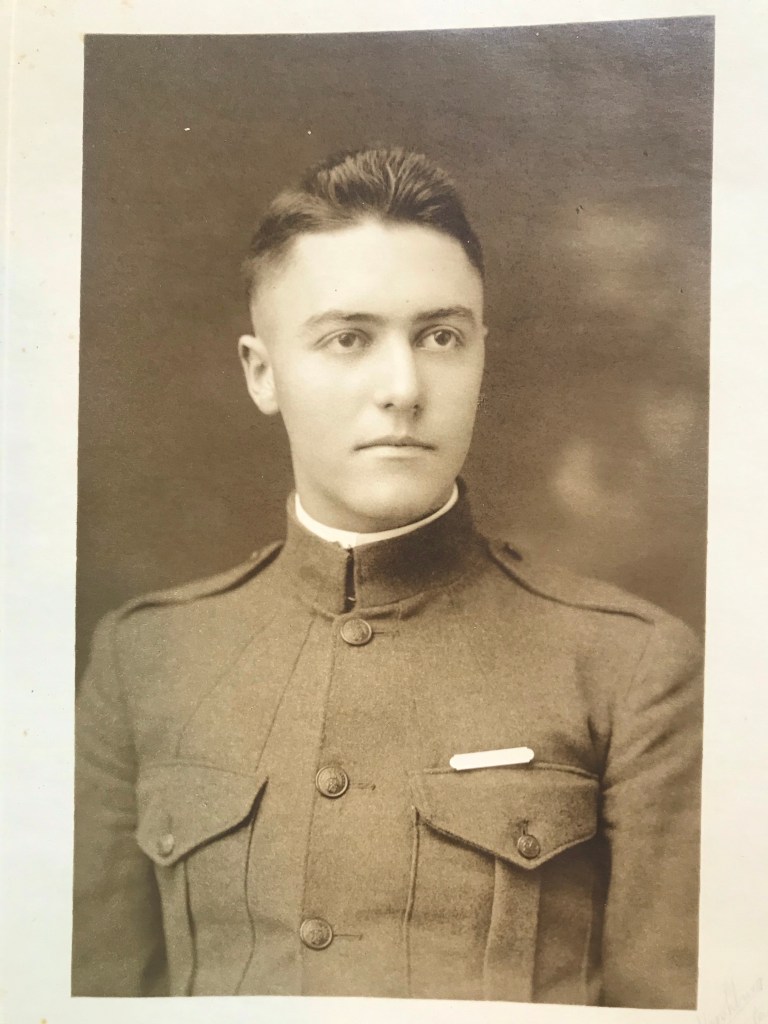
This is an incipient autoethnographic process, meaning that I’ve only recently begun to review, catalog, and transcribe the ‘papers’ stored at my parents’ house, which detail through saved letters and documents – a receipt for a train ticket, a certificate given for having died in the war – my great-great uncle’s running away from home at age 16 in 1917 and his subsequent experiences in the Marine Corps training prior to being deployed to fight in WW1. He died in mid-1918, just 18 months after he had written home from his run-away to Florida that he wanted to be an architect.
His father – my great-great grandfather was a presiding Georgia State Supreme Court judge during the same era that gave rise the 1906 race riots in Atlanta and the sociopolitical infrastructure that would give rise the Ku Klux Klan in Georgia, which Judge Beck was involved in, though only in ways both required of and appropriate for a Presiding Justice of the Georgia State Supreme Court in an ongoing post-Reconstruction era of ‘pressures from Washington’ to staunch and extinguish – once and for all – the smoldering bones of structural inequity and the flames of common hate in the American South. That said, it is likely that Judge Beck, while he may not have been out burning crosses in the yards of poor Black families, was almost certainly a person of power and influence in the development of formal organizations of hate in the State of Georgia. Additionally, one would imagine – at least I do imagine – that the cooperation of the head of the formal system of justice in the state would be necessary to facilitate many of the backroom wheelings and dealings – shall we call them? – protecting and funding organized domestic terrorism within the State of Georgia, as well as turning the blind eye to violent crimes committed against the sons and daughters of freed slaves in the American South, awaiting still the forty-acres and a mule promised to them as churches are set ablaze.
Marcus W. Beck, Jr. – son of the judge and my favorite dead uncle – was an artist and, as his pen+ink drawings suggest, opposed to prejudice and lynchings. He was a dark-eyed son, a prodigal son. Most bloodlines have a few of them scattered through the stories. Prodigal sons and rebel daughters.
Ten years after his son died at the Battle of Belleau Wood in France, Judge Beck accepted the carving of Robert E. Lee at Stone Mountain, Georgia on behalf of the South.
As I consider this cache of family history from my father’s bloodline, I am reflecting on my experience of learning about this particular branch of my ancestry – my thoughts and feelings about this history I am discovering, my judgements and laments.
I am deeply considering why I may feel so conflicted, sick, and sad to think about the story of my great-great uncle Marcus who was an artist that wanted to be an architect and his father the Judge-with-a-dead-son going on and on in his long-winded acceptance of the Robert E. Lee monument while the crowd stood in an uncharacteristically cold April rain waiting for him to finish his long, bizarre speech.

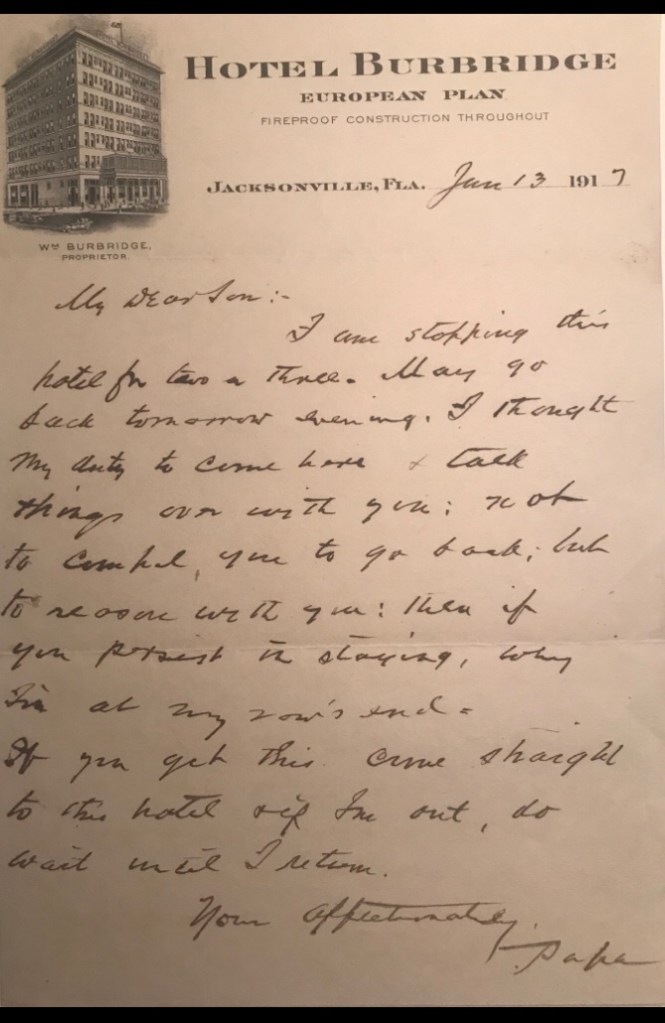
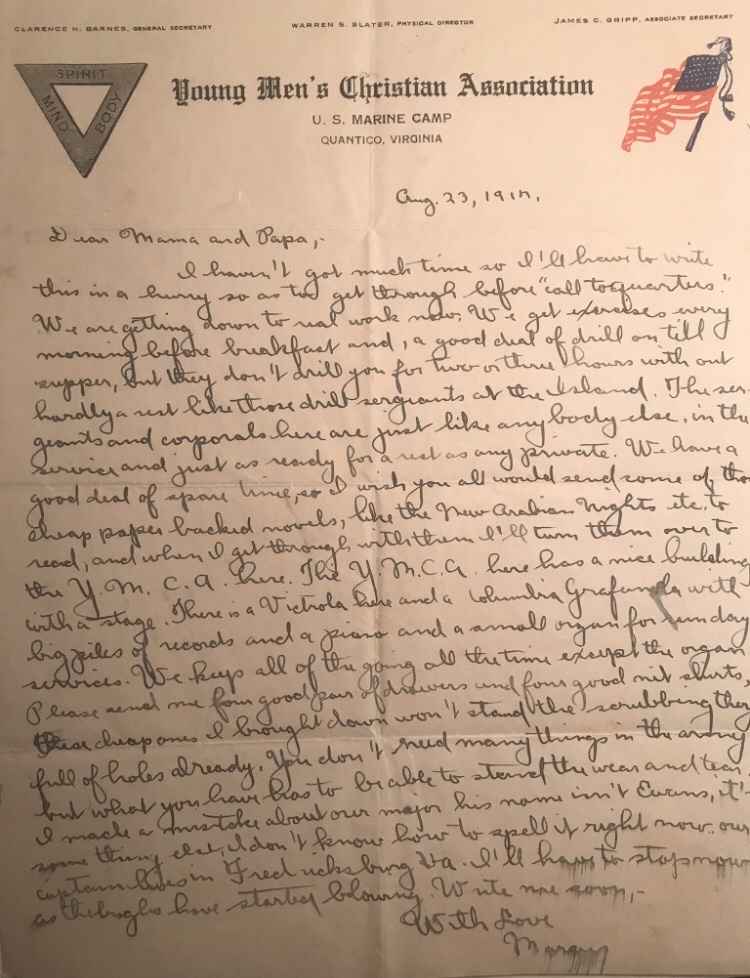


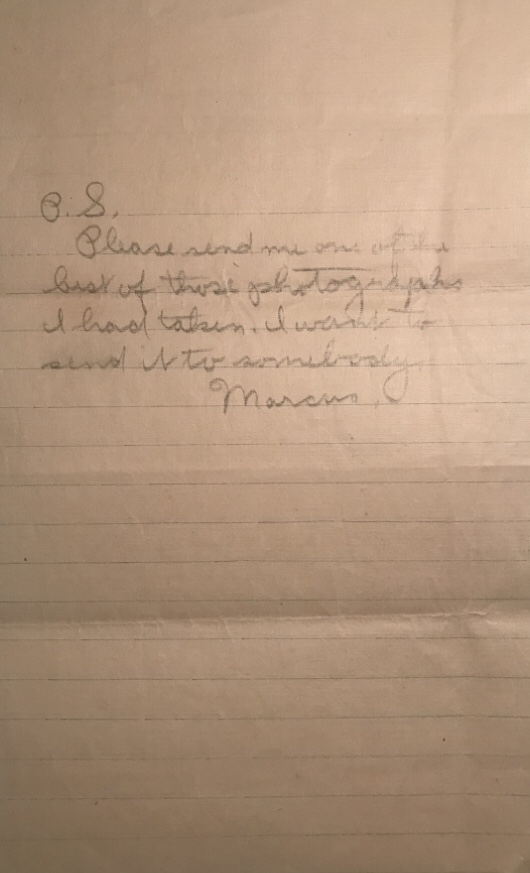
I don’t know what it is about humans that make us so fascinated with what came before our brief little time, our nanosecond lives on earth.
Who am I?
Who are my people?
What happened to create the world that I understand to be real?
What are the stories that define who I am?
I grew up in the American South, and am – if I count back the sons and daughters correctly – a 6th or 7th generation Georgian on my father’s side.
It is worth noting that – in my opinion – nobody other than the descendants of indigenous people can justly claim multigenerational ancestry tied to any place in the lands we call North America, as their ancestral lineages stretch back thousands of years.
The rest of us Americans are the descendants of immigrants, refugees, or colonial conquerors.
Although my mother is from Florida, her grandparents immigrated to the United States from Lebanon in, I believe, the 1890s. They had intended to go to Albany, New York, but due to what is explained as ‘getting on the wrong train,’ they ended up in Albany, Georgia at the edge of the 20th century, just three decades after the end of the American Civil War.
Although the Nicholas (ex Khoury and al-Shahaidi) family eventually moved to Miami, they lived in Georgia at the same time my father’s great-grandfather was gaining judicial stature.
My maternal grandfather – brown eyes, brown skin, tightly curled black hair, a mother who spoke little English – was born in 1907 in Albany, Georgia, the year after the riots in Atlanta.
I know nothing of his childhood and very little about my mother’s Lebanese ancestors in general, who they were, where they were from, what their experiences as immigrants held.
As an adult, the man who would become my mother’s father married late to a young switchboard operator named Faith, who had come out of an abusive family line in Alabama. They had 3 daughters and lived on SW 23rd Terrace in Miami, a small house with Spanish tiles on the roof.
When their youngest daughter – my mother – was 10, my Lebanese grandfather dropped dead of a heart attack on a business trip to Jacksonville, the city I would be born in 16 years later.
He was an low-level executive in the Florida Milk Co. The few pictures of him are photos of him at work, black and white company photos.
In photos, he is the only brown man in the room, but he is smiling, and looks happy, a light in his eyes. He seems American in his suit and tie.
His family spoke Arabic until they learned English. My mother called her paternal grandmother sit’ti and in the 1980’s, I ate kibbeh, lebneh, and khubz arabi when we went to Miami. My mother made lentils and rice as frequently as she did spaghetti, prepared spinach pies with shreds of American orange cheese instead of lemon juice and vinegar.
I am the only one on my mother’s side of the family who has studied Arabic, who made an effort to learn the language of where some of my people are from, a language that was forgotten in the ever-present glare of necessity to speak English, to be American.
I imagine that people in Albany, Georgia at the turn of the 20th century might have…what? Disliked the Lebanese immigrants? Discriminated against them?
I don’t know. I can imagine all sorts of things, but I have no facts and – like I said – facts are dubious when it comes to history.

Judge Beck was appointed to the Georgia State Supreme Court by Governor Joseph M. Terrell in 1905, a year before the Atlanta race riots of 1906.
The term ‘race riots’ may not be an accurate descriptor for the events that took place in Atlanta the September that my great-grandmother was 11 and her brother – Marcus Beck, Jr. – was 8 or 9.
What happened in Atlanta in 1906 was a massacre, ‘a mass beating, a mass lynching. The term ‘race riot does not name the details and descriptors of what happened in Atlanta.
‘Race riot’ does not explain that a violent mob of 15,000 – 20,000 white men raged through the city destroying Black-owned businesses and gathering places, killing dozens of Black people in the streets. The official death toll was 25. Nobody knows how many Black people really died. Some estimates place the death count at over 100.
Only two white people died, and one was a white woman who had a heart attack after seeing the violence in the streets outside her home.
‘Race riot’ doesn’t name white supremacy, or white violence.
In my mind’s admittedly imperfect conceptualizations, a ‘race riot’ means that a large group of people from a marginalized and racially-oppressed demographic group take to the streets in an angry and unruly manner in outraged and grieving response to race-based injustices. Property may be damaged, such as the burning of police vehicles as a response to police brutality, and opportunistic looting may occur.
A ‘race riot’ does not mean a small army of demographically distinct people sweeping through a city, entering neighborhoods and killing people from another demographic group.
‘Race riot’ does not mean 15,000 white people – (Men and boys, mostly, I’m almost sure, as it was likely not proper for white women and girls to be out in the street committing acts of violence, though if one has ever seen the ugly hate on the faces of white school girls protesting school integration in the mid-20th century, 50 years after the Atlanta race riot, it is easy to imagine white women and girls cheering on the brutality committed by their male counterparts.) – publicly killing dozens of Black people and going out of their way to destroy Black-owned businesses, burning Black homes.
It was not until 2006 that the Atlanta race riots were even officially acknowledged by the state of Georgia.
I can recognize in myself a subtle sense of embarrassment, a sheepishness, in admitting that I had no idea that there was a ‘race riot’ in Atlanta when my great-grandmother was about to turn 12, when her Papa – as they called him – had just become a Supreme Court Judge the year before.
The Atlanta race riots of 1906 were not part of the Georgia History curriculum taught at Mary Lee Clark Middle, Camden County, c. 1988.
Although I have a minor in Black Studies with a BA in Sociology from Portland State University, I don’t remember any African-American History courses that mentioned the Atlanta race riots. This event probably was taught, perhaps in a lecture crammed full of the brutal beatings and racism-fueled fires of the early 20th century in the American South – but, I took those classes 25 years ago and – to be honest – a lot of history just blurs in my mind, the details and names and dates slurring into a cluttered timeline of mass atrocities that leaves my heart heavy with the enormity of how many ugly things happen in the world.
I wonder what it was like for them, the children of the house. Rachel and Marcus, their older sister Margaret. Their father was an important man, had become an important man. Their Papa was a judge. They were home with their mother, going to school. I don’t know what their lives were like, the day-to-day of home and childhood, their little world.
One Saturday afternoon, the newspapers reported that two White women had been raped by Black men and the city exploded into violence.
I wonder if my great-great grandfather went out into the mobs. He was, after all, an ‘important man.’ He may have only watched the violence.
Regardless of whether or not he was in the streets as a ‘rioter’ – it is very, very likely that he contributed to the violence – condoned it, perhaps even sanctioned it, agreed to allow it, conferred with the Sheriff and deputies who – it is said – openly participated in the public beatings and burnings of business.
As I write this, I notice a sick-ish feeling in the center of me and I don’t know – specifically – why I feel this.
Is it the knowledge that accusing a Black man of raping a white woman, or – in the case of Emmett Till, whistling at or even talking to a white woman – was (and in some places, in some minds, still is) essentially a warrant for violence against the accused Black man, as well as violence against people of African descent in general?
Is it the knowledge that my great-great grandfather was involved in the establishment of structural and systemic racism in the state I grew up in, those bloody ties between injustice and the justice system?
Just as the facts of history blur in my mind, my heart’s response (and my nervous system’s response, my mind’s response) to the rampant ugliness of American history, world history, the reality of slavery, old mothers mourning stolen sons in Sierra Leone) is less a specific facet of feeling and meaning, and more an overwhelming though quiet wash of feelings and images that sums itself in feeling sick, feeling sad, graven at the center of me.
My ability to articulate any sort of coherent incisive reflection or analysis is blunted and stammering, regressive almost, stammering like a child about how it’s just so grossly wrong, all of it.
“All of what, Faith?”
“All of it! People and society and stores and wars and this disgusting commodification of every fucking thing, rape culture, slave economies, police brutality. All of it.”
I feel like spitting. My hands are tingling with wanting to clench. I can feel something big and righteous in my chest, an aggression. An anger. I am an outraged child, tormented by the dissonance of knowing that people I love and who I want to see as good people do things that I know are deeply ugly, wrong, deplorable.
It’s interesting to think about the perspectives of the white men who took the streets in a killing mob one Saturday night. They were probably feeling righteous about themselves and what they intended to do. In the context of who they were and the times they lived in, they probably thought their actions were serving some twisted justice.
It strikes me, however, that perhaps they were also excited, that maybe they wanted to kill and destroy, that they seized the righteousness they found in the perception of themselves as the white male savior and protector of white women against a perceived threat, and allowed that male human bloodlust to be released en masse.
One thing I do remember from my African American History class is my professor asking us if we thought that any Black man in his right mind would dare to sexually assault a white woman with so many examples having been shown to him of what happens to Black men if they mess with white women.
White men had raped women and girls of African descent for generations and generations, had brutalized women and girls of African descent.
God, I feel sick.

7/06/2013
Everyday, this time of year especially, I think about my favorite dead uncle.
It has been about 3 years since I opened up the box of papers and set his ghost free.
How do I know there was a ghost?
I could feel it.
I don’t know why I decided to ask my father about Uncle Marcus’ letters, where they were. It’s possible that I simply remembered they existed, and wondered what had happened to them.
I was surprised to find out that the box of letters and photos was here, in the mountains.
Then again, where else would it be?
I think I wanted to see his drawings, because I was drawing a lot then – a picture every day for a year, already well into the 3rd quarter of that project and learning how to forget to try, to forget my own ideas, to let the pictures be what they wanted to be. I had started to see and to notice the shapes in everything, and remembered sitting on the wooden front steps of the house I grew up in, the Dome House – which is what my parents took to calling the stilted plexiglass and lumber icosidodecahedron and long kitchen hall with bedrooms and decks and stairways down to the grey sandy yard shaded by oaks that dropped dead leaves all year long, littered the ground with their beetle-brown shells, the Dome House on the river bend, if you break west from Borrell Creek and travel the map of the lands edge, past the point where the cedars grew and the sand was clean, smooth, almost a beach, that place once it ceased to be the place they called home – listening to my father tell me that clumps of bubbles fuse in 60 degree angles, making hexagons…endlessly and without will.
In the period of time that my adult-world marriage had thoroughly crumbled, and I had been drawing everyday, I had started to remember many of the things that I had not remembered for a very long time, and – to be honest – it was a bit much, the remembering…all the remembering.
I opened the box very innocently, just wanting to look at old things and think for a few minutes about the smell of my great-grandmother’s house and about the closet that the papers were in, the closet in the room on the shady side of the house, with hydrangea an impossible blue beneath the second story window of the room with the cabbage rose wall paper.
The closet seemed to gasp out all its dusty, old smells in surprise when the light – a bare bulb on a brittle string – was turned on with a decisively incandescent click to display in swinging shadows shelves of boxes and old rows of shoes, a war helmet on the wall with the words “War Is Hell” written across the top of the old canvas.
We knew that there were letters in the boxes, though we never saw them. The boxes were never opened. We knew the letters had something to do with Uncle Marcus, who died before ever becoming an uncle.
We know this because his sister, my great-grandmother, told us. She was the one who saved them, all that proof of the brother that she had lost.great-grandmother saved them, all that proof of the beloved brother that she had lost.
They say that he was “special, an artist.”

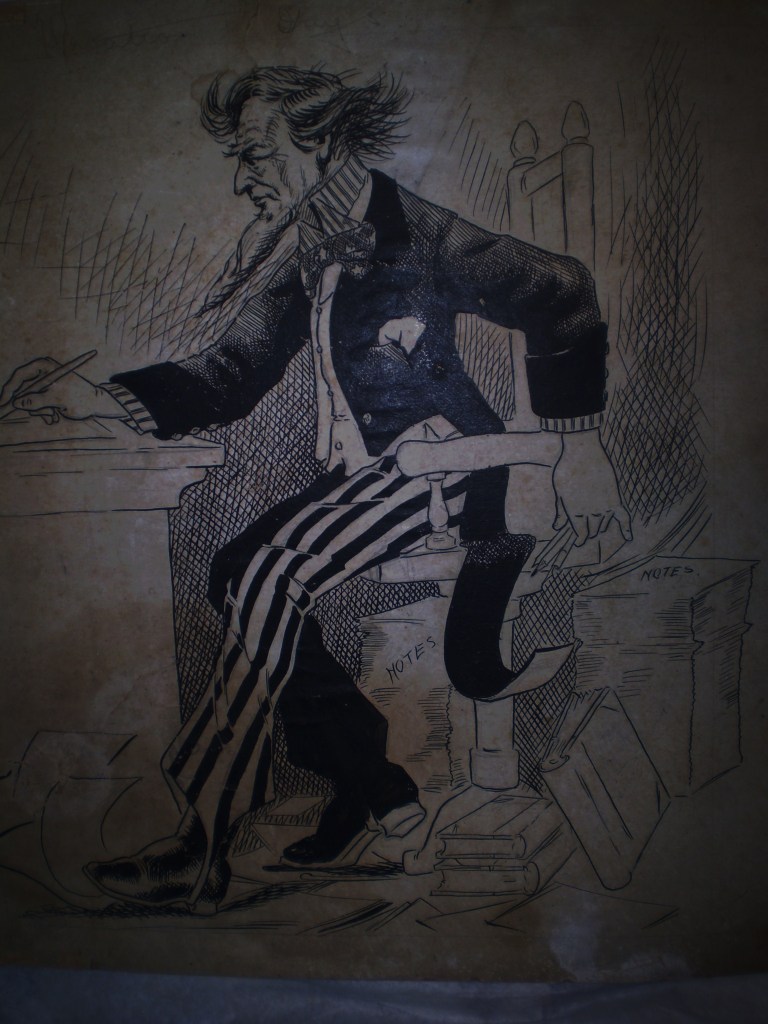


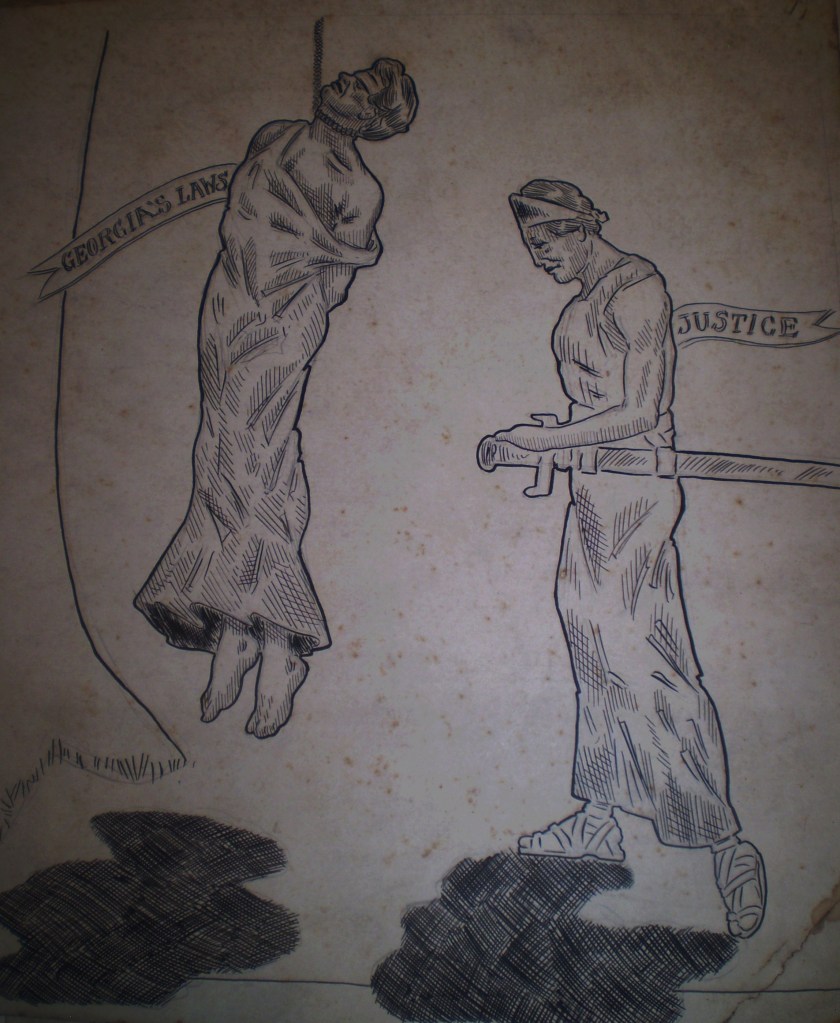
I was in my mid-30s when I first saw Marcus’ drawings, and understood that he was deeply critical of politics and laws…and lynchings.
As a teenager, he drew the picture above, which depicts a sword-wielding figure with a sash reading ‘JUSTICE’ hanging a classical white woman-ish figure with a sash reading ‘GEORGIA STATE LAWS.’
He was the son of a Georgia judge in the early 20th century.
When I was young, and wanting to draw pictures, people would remember him. I don’t think I ever identified with him though, except to wish that I might be special, too and to long to have enough bravery to run away to the circus, or somewhere.
My family – like most families, I guess – is full of histories that nobody ever talks about.
We did not speak of the way my father’s mother briefly married her professor, or how it was that the professor came to leave just after my father was born, the marriage annulled. For years, I did not know my paternal grandfather’s last name. I still don’t know his first name, and have never had any contact with any of the people I am related to through his bloodline.
We did not speak of how my great-grandfather died or the fact that my beloved great-grandmother was an alcoholic.

Why have I never wanted to write a book about my great grandmother?
She was the one who taught me to play cards, after all. She was the one who taught me to tell stories.
Why has her ghost never clamored at me the way her brother’s has, nagging “Tell my story, tell my story…”
Perhaps it is her, not him, that is nagging?
Maybe it is both, doing as children do, which is to try to get what they want, to get what they need, to have their voices heard.
Why else would she have saved his papers and drawings?
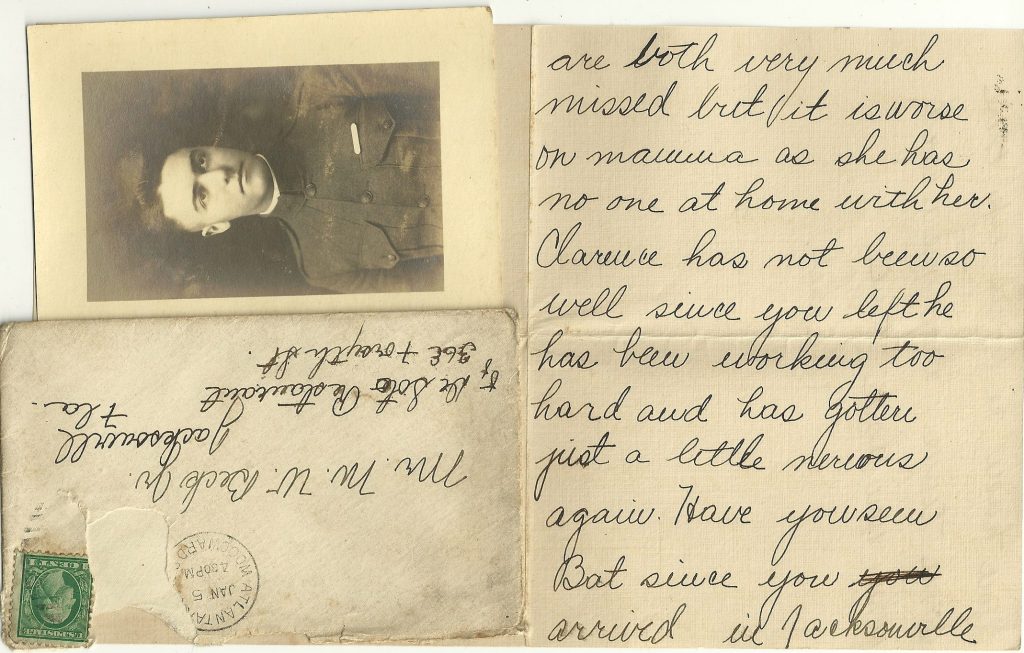

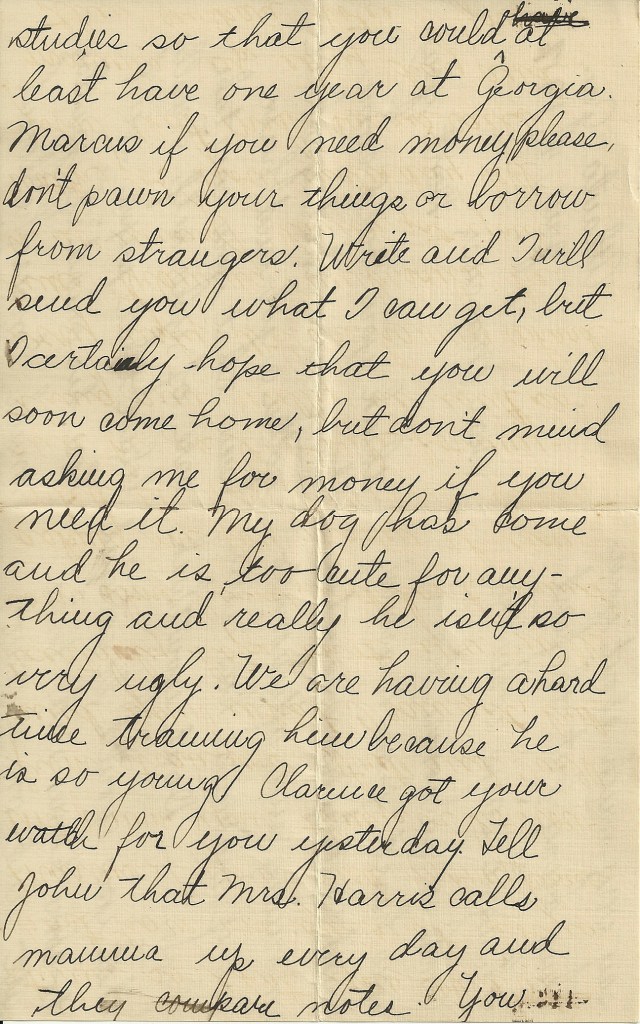
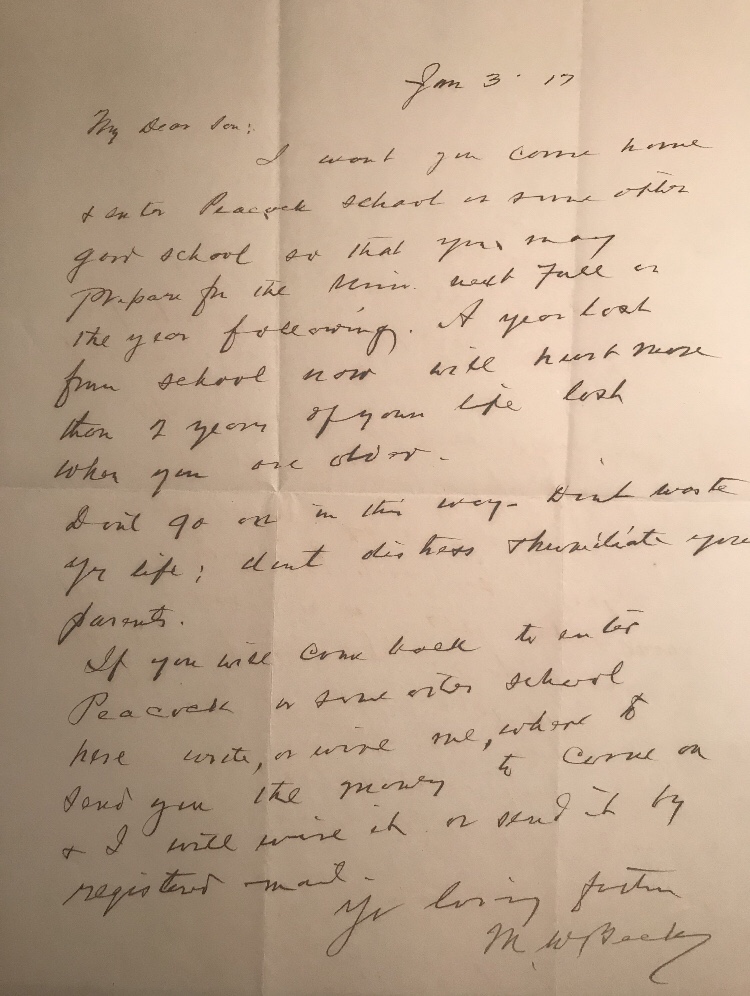
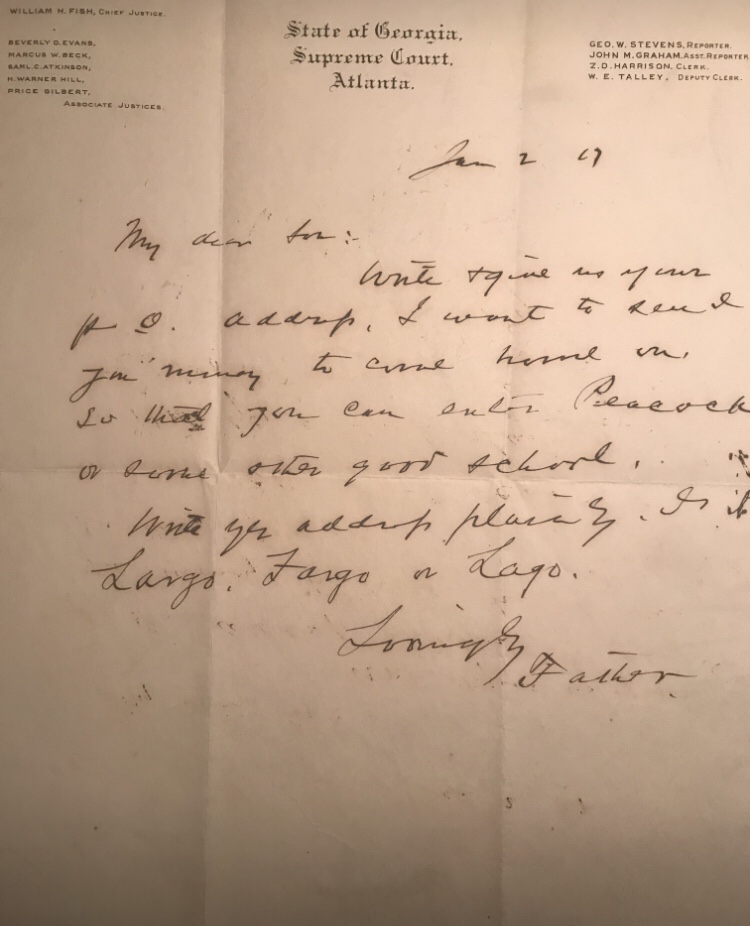
A Letter From Rachel Beck Moeckel to her Brother Marcus, Jr. (1917)
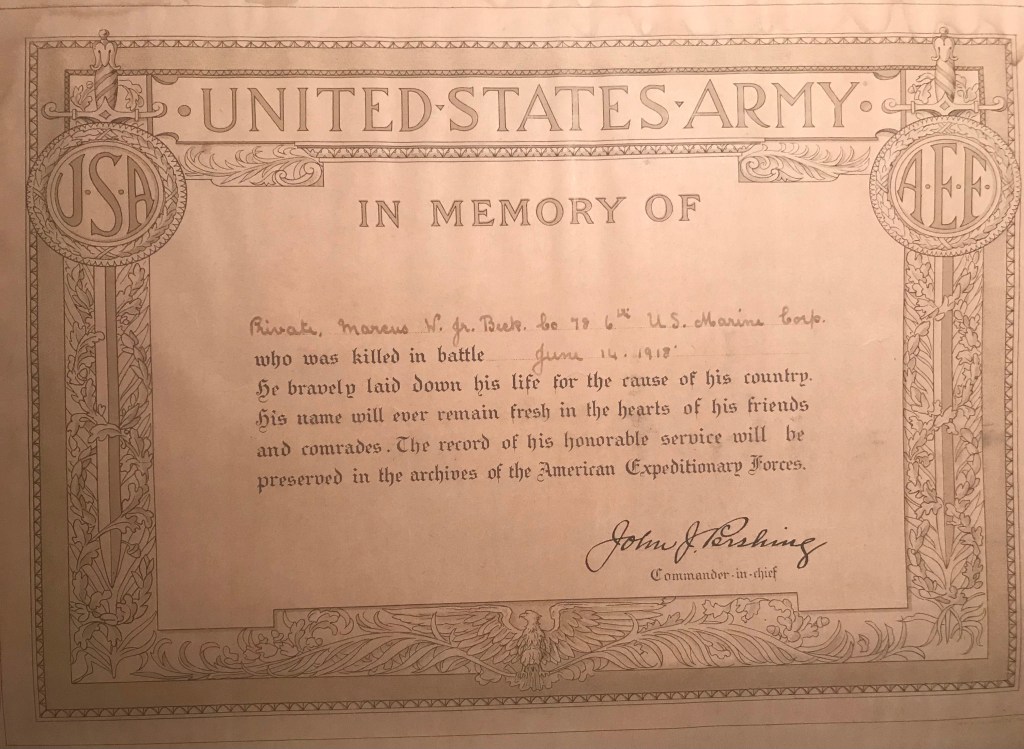


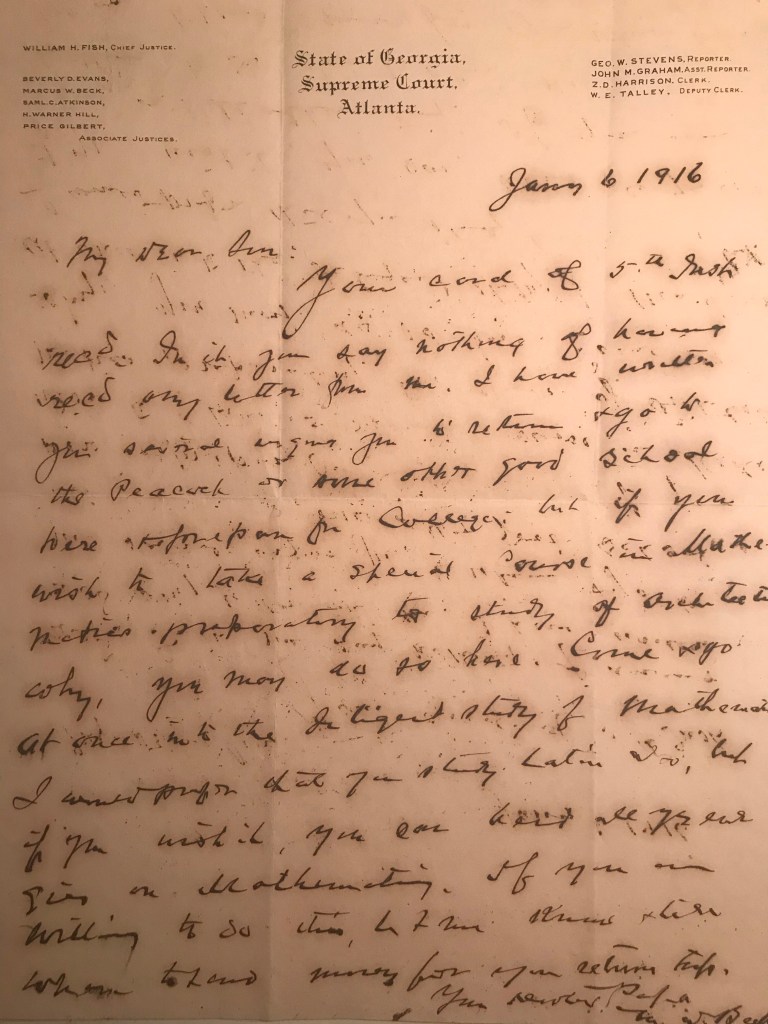

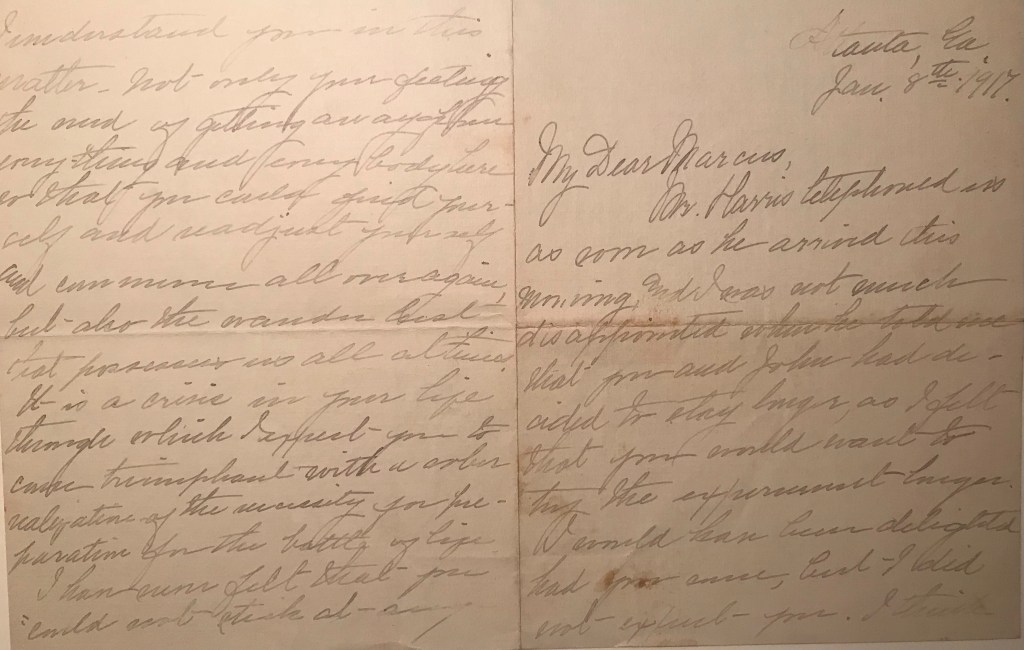
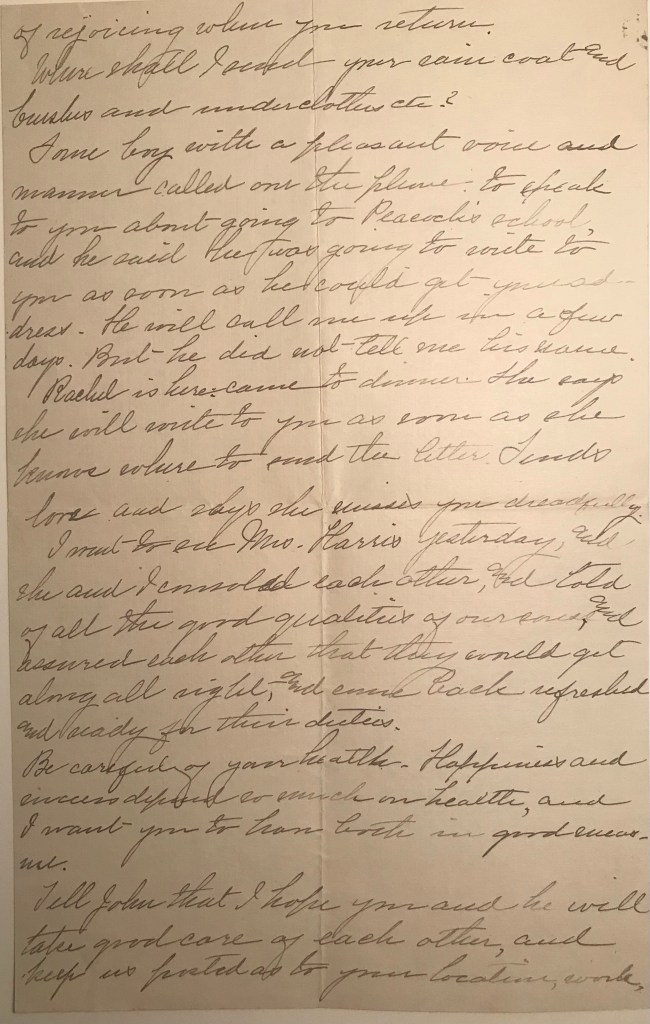

Jan 3, 1917
My Dear Son:
I want you to come home and enter Peacock School or some other good school so that you may prepare for [?] next Fall or the year following. A year lost for school now will hurt more than a year of life lost when you are older. Don’t go on in this way; Don’t waste your life. Don’t distress and humiliate your parents. If you will come back to enter Peacock or some other school here write, or wire me, where to send you the money to come on & I will wire it or send it by registered mail.
Yr loving father,
M.W. Beck
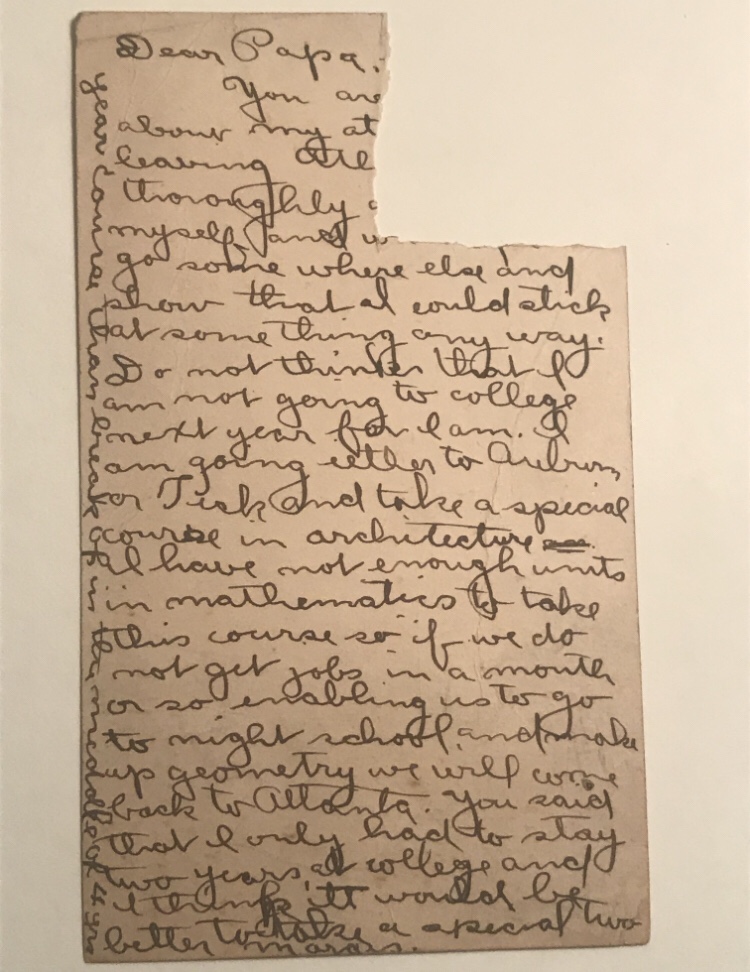
Dear Papa,
You are –
about my at –
leaving [?] –
thoroughly –
myself and –
go somewhere else and show that I could stick with something any way. Do not think that I am not going to college next year for I am. I am going either to Auburn or Fisk and take a special course in architecture. I have not enough units in mathematics so if we do not get jobs in a month or so, enabling us to go to night school and make up geometry we will come back to Atlanta. You said that I only had to stay two years at college and I think it would be better to take a special two year course than break off in the middle of 4 years. Marcus

Parris Island, S.C.
July 4, 1917
Wednesday
Dear Mama and Papa,
I am writing you this way because I am afraid if I write two letters that I won’t be able to finish both of them. Today’s the big day here and instead of celebrating with noise and powder, we’re celebrating with athletic meets. We get enough fireworks on the rifle range on other days. We haven’t started shooting yet. We are just snapping in. Snapping in is when you learn how to aim and hold the gun, judge distances, etc. it’s the hardest and most important part of the range training. “Colors” just blew, sixteen bugles all blowing together and everybody standing at attention.
[stamp reading M.W. Beck, w/ text reading “This is the way we mark our clothes”]
There is going to be a big fight tonight to decide championships of the island. It’s between a fellow in training and an old timer named Kelly, who is the present champion. The new man is an amateur from N. Orleans. I broke my resolutions and bet $5 of my next months pay into the New Orleans fellow. He’s in the next street to us. Nearly everybody in camp has bet up on this fight. I don’t consider it the same as playing poker for money or shooting craps. We had some dinner today. Real chicken, (unreadable) potatoes, an orange and a banana apiece and all the lemonade we could drink. X That cross represents a pause. The (unreadable) down at the docks fired the first salute and everybody ran out in the rain to watch it. There were fifteen salutes fired. The light’s so poor I have to
[end of page]

I just got home from Fairview, where my father – as he folds old shirts he calls Hawaiian, but that are really more Floridian, with dolphins and colonial compasses and sportfishing boats – tells me again that I should just get in touch with the people at the University of Georgia and tell them that we have all these old family papers, original documents from the life and career of Marcus W. Beck, whose journals are archived at the university and who is of historical significance due to him being a Georgia State Supreme Court Judge during the first quarter of the 20th century, as WWI unfolded, raged, and took the life of his namesake son following a year of tense rebellion that produced a thick sheath of correspondence between young runaway Marcus, his father and mother, and his sister Rachel, who was my great-grandmother and who I was raised with until her death when I was 16, in 1992. Rachel kept the letters and papers in a closet upstairs in an unused room on the northwest side of the house, perched above the bright blue hydrangea that bloomed and nodded heavily in the shade alongside a dirt road that I still dream about frequently.
Rachel Beck was born in 1894, and so I grew up in the 1980s in South Georgia just down the road from a person I loved that was born in another century.
Marcus W. Beck was significant not for groundbreaking legal decisions that changed legislature, or for his authorship of seminal works of law, ethics, or literature, which – to my knowledge – he was involved in neither, but because in April of 1928 – on behalf of the South – he accepted the as-yet-unfinished monument to Robert E. Lee at Stone Mountain, Georgia, a monument that over the next 40 years would become the largest confederate monument in the United States.
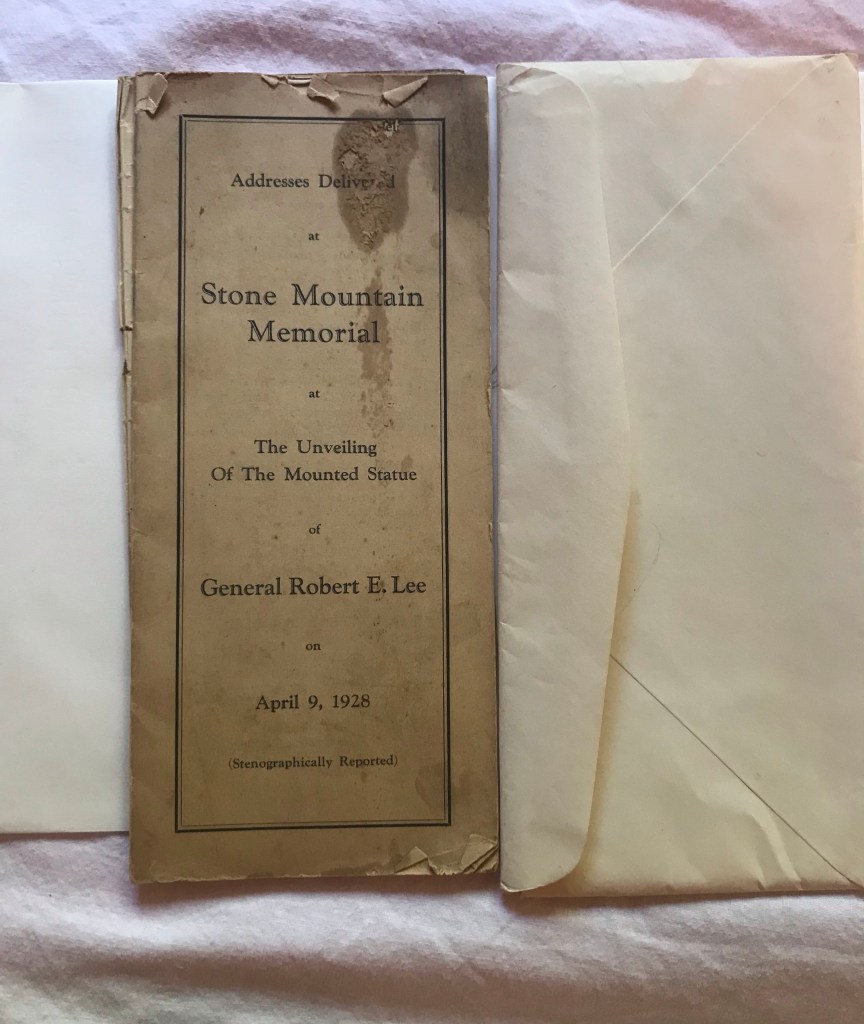
Judge Beck accepted the monument on behalf of the South via a speech that my father tells me that ‘some article somewhere’ reported was a lengthy speech on an unseasonably cold and wet day in early April, 1928.
[Insert excerpts of speech content] [Note: January 4th, 2022 ~ It has been several months since I actively worked on this project, though it has been with me every single day as the pressing haunt of a family curse that my belief in may be considered by some clinical sorts operating from a 21st Century whiteheteronormativeempiricistwestern worldview, where there is no such thing as ghosts and the dead don’t trouble the living. That’s not the world I live in, nor is it the world I was raised in. It is not appropriate or just to impose the assumptions and parameters of one’s world onto the worlds of others. It is a violation. If other people want to live in a genuinely dead world where nothing means or does anything other than the most suggestion, the most clear purpose in a mechanistic and commodified consumer culture, that’s fine. I prefer to live in a world where everything – even the dead – is alive, and has been alive for as long as the Earth has existed. That is the world that makes sense to me, being the person I am and being from where I am from. My beliefs – which is formulated through direct experience put through variable rigors of logical consideration of various possible interpretations – as they pertain to matters of ghosts, family curses, etc. are not that strange at all. I am the daughter of a haunted family, a family haunted by its own history and multigenerational moth-balled stifling of any sort of actual remunerations, reparations, healing or reconciliation at all. Just as my great-great Uncle Marcus saw, our lineage – our blood, the knowings carried in the nuances of fear and shame we pass down – is not just tied to injustice, but shackled also to a shocked sort of grief. I have no idea why Judge Marcus W. Beck read the Bible 30 times, but it seems to me that only a very righteous or a very doomed soul may be so motivated. I have in my possession Judge Beck’s copies of Dante’s Inferno and Paradise Lost. There are notes made in the margins, cantos noted with an asterisk, a line along the edge of the page. I have not studied those notes, nor have I read – in it’s entirety – the speech that Judge Beck gave on April 9, 1928. It’s a very long speech, and although I have only skimmed through the booklet the speech was printed in – a transcription of the entire ceremony that cold, rainy day at Stone Mountain – it seems that in the pages and pages of my great-great grandfather’s speech – he isn’t making much sense at points. There are bizarre references to literature, peculiar divine references. I have wondered if he was drunk, or 1/2 mad, he must have been a man possessed – to go on so long as he did as people waited in the rain for the ceremony to end?
On April 9, 2028 – if I am living – I am going to do an Un-Performance in which I read the speech backwards and allow myself to enter into whatever diction, cadence, stumbling, retching, holler or silence I may feel or happen into as I gesture toward un-doing at least one of the mistakes Judge Marcus W Beck made. I have already begun to facilitate my emergence as a new media artist, a narrative artist, an interesting voice, an interesting story.
Six years should be enough time to make arrangements for a suitable Un-Performance, all proceeds from which will – of course – go toward efforts to have the monument sandblasted or otherwise removed with minimal additional damage to the stone face of the mountain, to Black communities in the Stone Mountain area, and to identified tribal nations who may be down lineage from the people who held that truly ancient monolith to be sacred.
In his acceptance of the monument, Judge Beck offers a thorough example of the idolatry of Robert E. Lee and other Confederate leaders that is part and parcel of the revisionist history of the Civil War known as The Lost Cause. The Lost Cause narrative is the substance of an imagined Confederate heritage, a story that one can and should be proud of.
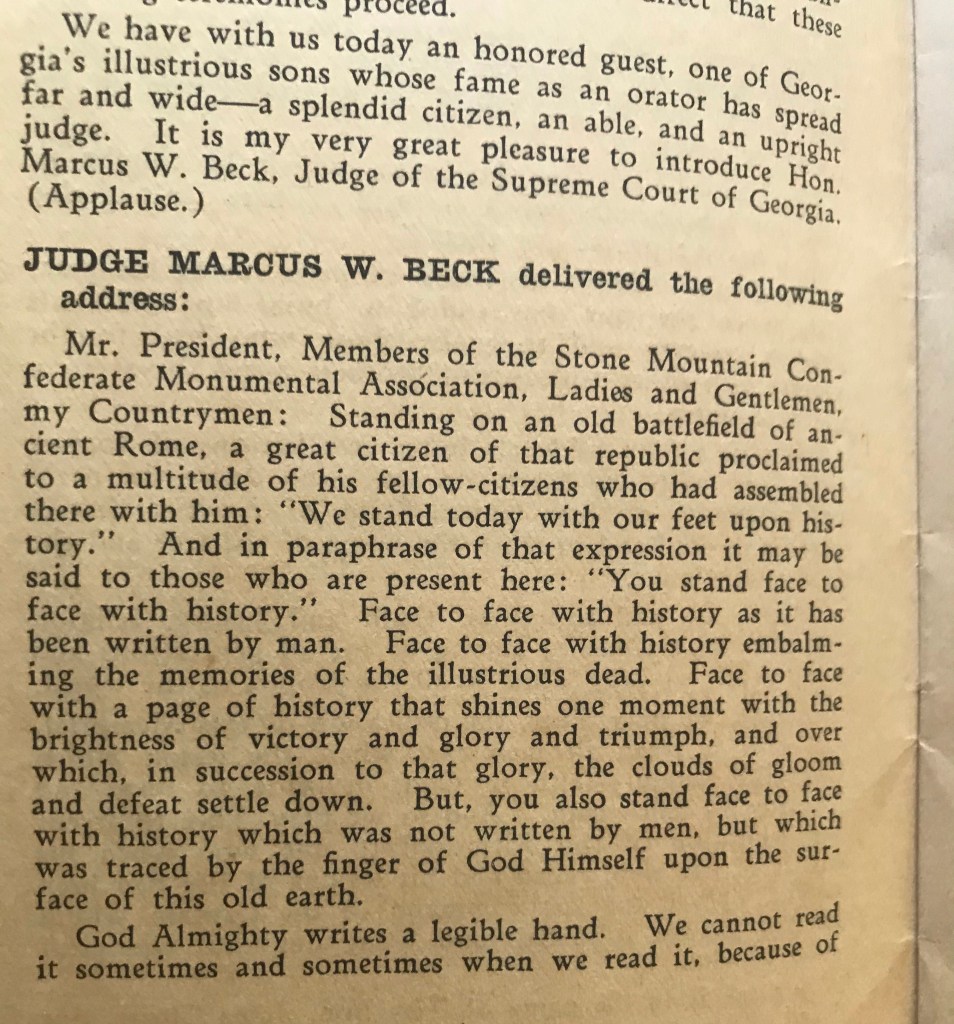
Millions of people in the American South have been told that this is their heritage, a heritage to be proud of and to defend, a noble resistance to threats to the ‘way of life’ in the South led by brave and capable men.
The Myth of the Lost Cause is…a myth…epic story spun to tell people what is real and what is true, a story to teach a lesson, to shape our worldviews and our identities.
The Myth of the Lost Cause was designed to not only justify, but glorify an act of treason orchestrated to protect the interests of those who profit from slave economies and to preserve a ‘way of life’ that was perceived as being under attack by the efforts to abolish slavery.
This alternative version of history promotes a deeply biased, factually inaccurate, and aggrandized story which uplifts and benefits the character of the (white) Confederate Southerner and proffers a sense of distinct historical and ethnic identity that exists in what seems to be a confused, tense, but generally compatible relation with the similarly white supremacist United States of America, a country whose dominant culture all but demands assimilation into a peculiar brand of English-speaking consumer capitalist culture in which only smatterings of the diverse languages and life-ways of ancestors from all over the world survive only in the form of phrases and food, clothing styles and sacred symbols that have long since been appropriated by the trend fashion industry.
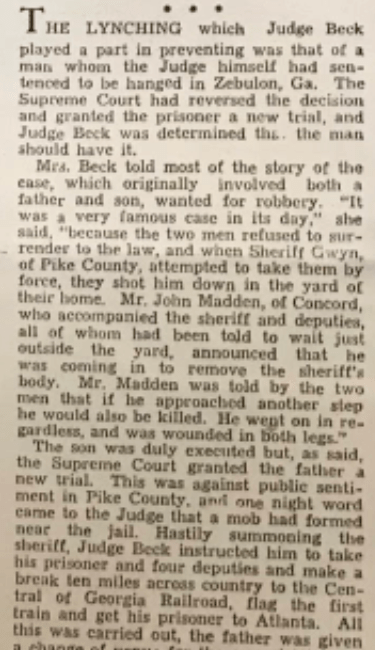
My father is unfolding the shirts and now putting them on hangers, telling me what I should say to the university librarian when I offer to give them our family papers for the purpose of making them available to study. “Just tell them these papers were discovered, primary source documents, and that we want them to be placed in archival…”
“I know what to tell them, how to get in touch with people and what to say.”
Did my father not realize that I had secured over ½ a million dollars in grants for nonprofits over the past year, while doing other work no less, and that I have a Master’s degree?
My ego felt stupidly wounded and I watched a blithe blankness spread over my father’s face as I went on speaking. It is hard to listen to me sometimes.
“I am not going to have them donated or archived until I have a chance to look at the documents and work on them. I mean, this is why I studied sociology, this is why I have a degree in Black Studies, and learned how to do content analysis on media messaging about race, and why I went to the University of Georgia to study under Dr. Beck who researched lynchings and lynching culture and even though that didn’t work out, I still think that it is not entirely out of my wheelhouse to put together an essay or an account of the family papers, particularly as they relate to Judge Beck and Marcus and the monument at Stone Mountain. There are two pieces of legislation right now in Georgia that are focused on the future of Stone Mountain and some groups are actively advocating for the removal of the monument. It is a big deal. The largest Confederate monument in America. I want to at least put together and publish one or two essays and an autoethnographic piece about the papers and my ancestry, so that if someone does decide to work with the papers, I can possibly work with them and learn more about how to do archival documentation and analysis.”
I want to explore how my knowledge of my ancestry, knowledge that for many years was slightly outside of my conscious knowing, but that still was evident to me in the dissonance that I lived with knowing that my great-great grandmother, Judge Beck’s daughter, was a white supremacist.
My father explained her racism as a matter of being a ‘product of her times.’ This concept – that people can become who they are based on when and where they grew up – seeded a sociological curiosity that exists to this day.

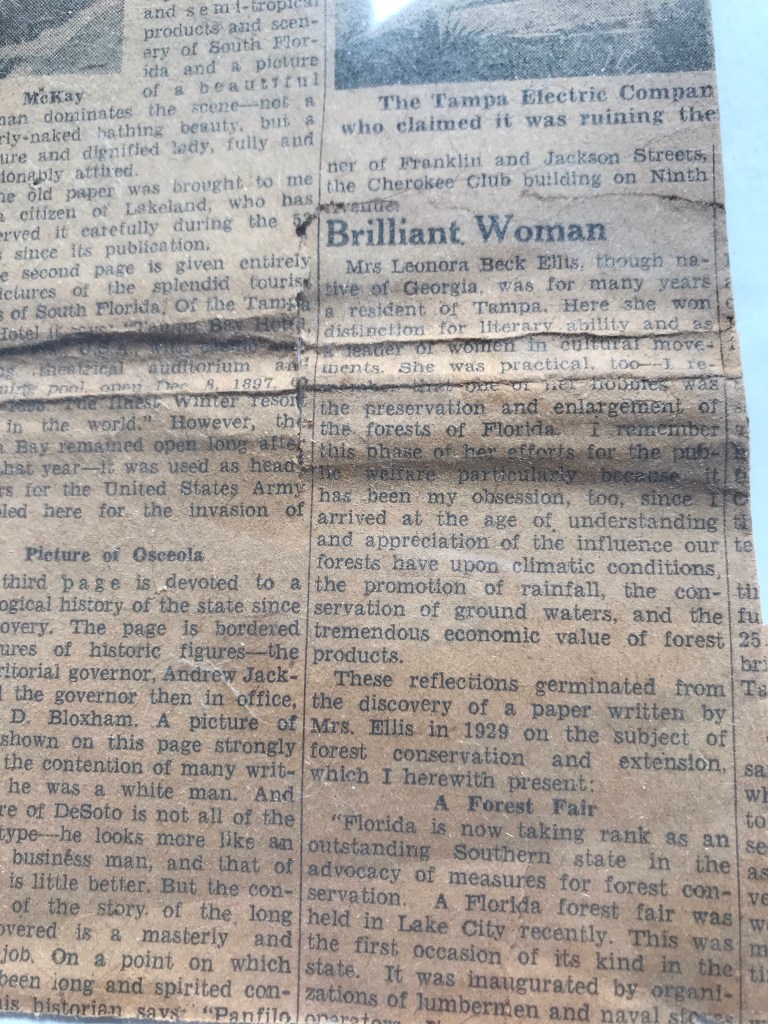
It is also important for me to reflect on the ways that not knowing my family’s history has also shaped me.
The knowledge that Leonora (“A Brilliant Woman”) had existed, along with more information about Marcus, Jr.’s love of and skill in drawing and his still-developing and yet radical perspectives on justice and politics, may have situated some of my least validated and most authentic character attributes in relation to my ancestry and – perhaps – offered me the opportunity to imagine the encouragement of my long-dead relatives as I floundered in becoming an artist, an activist, a social scientist. (See above caption)

The video above is not fantastic. It may not load on some devices. That’s okay.
Note unplanned awkward efforts to be sensitive to the fragile egos of reactionary good ‘ol boys through learned non-confrontational messaging and mealy-mouthed phrasing.
This reflexive social behavior has its origins in gender socialization to be pleasant and non-angry, as well as extensive social learning re: how truly difficult it is to interact with indignant, offended redneck dudes, with the sub-legit fear of pissing off the wrong Confederate fanboy, because some of those folks are delusional and armed.
Cringe-worthy in moments, this currently unlisted video features me speaking about how I want to see the Confederate monument at Stone Mountain removed.
Additional information about the history and possible futures of Stone Mountain are included in the video’s description on YouTube
I just got home from spending several hours – four, actually – on sorting out the family papers. My intent was to simply revisit the speech at Stone Mountain, for the purpose of doing a more thorough content analysis, but in the process of finding the speech pamphlet again, I had to go through a lot of boxes of old papers – lengthy letters, photos, and documents, invitations to weddings, sympathy cards and newspaper clippings.
“I’ll get the box out for you,” my dad said, and proceeded to pull all the boxes out of the deep closet set into the slope of the roof in the loft room where my family now stores our papers, at least some of them. Old tax records are kept in a different closet across from the bathroom downstairs, with the toilet paper and my mother’s robes, a laundry basket filled with miscellaneous personal care products that my mom found on sale or was simply stocking up on.
Before going upstairs, I asked my mother to begin writing down what she knows about her father’s family, Lebanese immigrants in the 1890s. She began to tell me right then and there the names and places and the story of how my great-grandparents arrived in America and went to Albany as they had planned, but ended up in Georgia, not New York, and were resigned to stay due to having exhausted their money for traveling and – besides – they were already there.
As I was talking with my mother about these things and getting ready to go upstairs and look for the speech again, to capture what was on the pages I’d missed in my first quick documentation of my great-great grandfather’s acceptance (on behalf of the South) of the unfinished bust and head of Robert E Lee that was carved into Stone Mountain, Georgia.
I don’t know why it is that I believe my ancestor’s acceptance of this monument – on behalf of an entire region, no less – somehow ties me to the responsibility to have it removed, to right wrongs done through – at the very least – the erasure of false idols from recent history, the symbols of men that have become enmeshed with a particular brand of Southern white supremacy, in which the old ways of being and the heritage of many white-identified Southern families are entangled with the brutal enslavement of millions of people who were kidnapped from their African home countries in a model of exploitative colonial capitalism that exterminated millions of indigenous people and stripped away the actual heritages of the diverse ‘European’ people who were designated ‘white’ in the ham-handed delineations contructed based on observable physical phenotypes at the expense of everything we really are and who our people really were. Not false wartime idols, but our real ancestors, our real heritage.
My father – again – was going on about talking to the archival people at various universities and I had to tell him again and again that it is important to me to be able to have the opportunity to look at the papers and do some work with them, to take an inventory.
“Yes, an inventory is a good idea, so that when we talk to the archival people, we can tell them what we are donating.”
When I talk to him about autoethnography and the current cultural relevance of white Americans unlearning the bad ideas that are woven into our National and regional identities, and – furthermore – it’s Stone Mountain! The biggest most atrociously tacky Confederate blemish in the country, accepted on behalf of the South by my great-great grandfather…my father seems to think I am foolish and that I don’t know what I’m talking about no matter how clearly, concisely, and intelligently I speak. I explain that if we just hand the boxes over to the University of Georgia, and don’t have our own digital archives, we will be relying on a university library to make the materials accessible beyond traveling to a climate controlled basement 4 hours from here to study the papers for a limited amount of time.
People who may want to learn about their distant relatives will not be able to ever see them, and it’s a good story, not just for scholars.
“Well, that all sounds good.” His tone is ambivalent, if not slightly doubting. “Then we can get things to a point where the scholars can have access to them.” He paused and glanced at me, “…and the wanna-be scholars.”
The hidden blog space on this site is being used to archive notes and reports on my process of autoethnographic inquiry and experiential data collection. This project exists for the purpose of constructing a project that will both satisfy the requirements of my degree program and offer me the opportunity to develop skill in practices of autoethnographic inquiry, as well as the opportunity to challenge myself in storytelling.
To give voice to one’s own understanding of experience while critically analyzing factors, forces, and constructions that impact one’s identity and life capabilities is unavoidably an act of resistance and reclamation.
Scroll down for links to initial posts regarding this incipient project.
Here is an outline of an expanded consideration of autoethnographic praxis in relation to this project.
In the meantime, the Wikipedia entry on Autoethnography is a well-referenced and informative resource on autoethnographic methodology: http://en.wikipedia.org/wiki/Autoethnography
References
Ellis, Carolyn. (2004) The ethnographic I: A methodological novel about autoethnography. Walnut Creek, CA: AltaMira Press.
Denzin, Norman K. (2014) Interpretive Autoethnography. Qualitative Research Methods, Vol.17. Thousand Oaks, CA: Sage.
Brief Autoethnography 1: A Subject Unto Itself [Initial reflections.]
Autoethnography 2: The Validity of Voice
Autoethnography 3: Messy Texts
Autoethnography 5: Outline at Outset
Autethnography 6: The Importance of Analysis [correspondence and recollection]
The wind that raised me
whispered
spartina alterniflora
juncus romanus
then laughed,
in wavelets holding
brackish reflections
of a blue that we called ‘sky,’
at the way we try to name things
The stories carried hints
like the underside of leaves
that had just pushed out
through the flesh of stems
in a gathering of cells
quick as lightning to open
without knowing why
into the sun that warmed
the tiny chambers of sap and cellulose
to cast a glow out into air
and radiate the simple, fervent scent
of brand new life
barely more than a breeze,
a soft exhale through the epiphyte
they called Spanish
even though it knows nothing about Spain
or anything else in the world
where things and places
have names
who I am, who I was,
the place where I am from,
which doesn’t exist anymore,
in the way that it did,
just like everything else
they come in the night
hot breath and mother’s milk,
smoke and beer,
the cold of ice on the tongue,
hollering across a blazing field,
speaking low
with the pine gathered close and quiet seeping
the sharp smell of a home
I will not see again.
glabrous shine dark red
to black, a critical mass
sweetness building slow
Beautiful people
all over the world, living
sad lives, scenic places
a chart, scatterplot
would show no going back now
too much ripe, ready
(what is it to live
the last summer of one’s life?
…asking for a friend.)
Next year’s cane reach bold
soft green, fleshy thorn, straight tall
not knowing, they’ll wait
Last week, a surprise
to find the dark half globe hid
among the blood red
Now, everywhere
more than ever,
then gone.
The look of the room
was full of New South
Palmettos in pines, sweet blessed shade
beyond the plastic lines of blinds
and brutal swathe of buffalo lawn
stucco on the outside
carpet and rush of cold,
compressed air
on the inside
all pale blue and grey
pastel accents
under khaki, sitting prim
and civilized, fur sprayed and face made
to be modern, educated,
informed behind the convex spectacles
that hide the earnest child
the one who wants to help,
the one who thinks they know the answers.
The answers were all wrong,
but she gave them anyway
because she thought they were right,
the answers.
A common mistake,
very human thing to do. To have the wrong answers, and to think they are the right answers.
“Your daughter,” she said,
“has a condition.”
On the night before the full moon
I bickered with my oldest child in the wind
About why he could not run off
to Shining Rock at sundown,
we watched the day explode
Glad for the gales that make silence
No need to talk in wind like that
light gold and purple
All across the mountains
Walking in the dark
Across the field of dry grass
Spotlight on our backs
Shadows on the road
Land rising black against the sky
Right under Venus
No lights up there on that rise
feet getting wet down here
shifting stones in the ink of the ground
I was with my children
Taller than I am
Daughter in the stream, wetting her head
her feet, like some baptism
just silliness
Silly like the geese in the river on Sunday
Reminding us
not to leave one another behind
Always,
a day full of voices
Warbled and piping
Bowed heads
and the happy, kicking feet of children
Old brows stern with the serious business
Of giving thanks
and the rituals of passing plates,
setting knives aside
with a gracious hand
Outside,
Away from talk
of games and scores,
sickness and health,
plans, a grievance,
maybe two,
wishes and a regret,
the solemn nod to the seat
now empty
owls call into the dark
roots rest in cold soil
dry leaves spin silent to the waiting ground
their arrival announced
in a whispering, settling sound
that nobody hears
While water falls across rocks
Stirring up wind
That blows branch and limb
against the windows
of warm houses,
and shudders the flames
of fires burning
all night long.
She considers the ringing in her ears
sweet lull between cars passing
Down on the street beyond
The tangle of old apple trees and privet
That hides this house
The birds settle down
when there are no cars
And the sky is beginning to have
That soft look about it
Like the inside of a blanket
Not even grey, just the white glare of down
a thunderstorm just being born
In the slight wind from the southeast
Where all those boneyard beaches are
She’d spent the morning daydreaming
Awake and smiling
In the ease of line
And in the imagining
of a quick drive from here
To there
A whole ‘nother world
Down there by the water
Now she considers the ringing in her ears
And how bothered she is by the sound
Of cars, the guttural push of a bus on the hill
She doesn’t think she wants
to go for a bike ride
To be out on the road
With the bright and the glare
The cars driving past
Loud all around her
I painted a tiny picture once
Of a woman on a table
Cut open at the chest
Blue roses spilling forth
From the cavity of herself
And what I meant to say with this
Sitting at my desk in a white painted room
With a window northwest facing
The view of the roof next door
lives underneath the tar
woman at a counter on the bottom floor
A store clerk and a seamstress
Making noodles
behind a wall of glass
While the brush painted blue
Onto blue
The curve of petal and closed lid
The movements of the city
Rushing as a breeze in the bare limbs
Of the tree that grew up between the buildings
And what I meant to say
Years ago, with that tiny figure
Blue roses spilling forth
Was that I wanted to show you
What’s inside of me
“Here, look,” she said,
leaned into the dark
disappearing into the slur of night
new moon, no moon
thick of shadow suggesting
just a little light
up there, Venus rising
sun gone, still
over past the mountain
casting dim on clouds
shimmer the leaves and slick up the water
but, fail
to show us the bark,
to show us the details
(Lenticel and the pursed mouths of blooms
not quite open
“Kalmia latifolia,” she’d told you at the car,
when she’d said,
“I am learning to learn again.”
and listed all the names she knew.)
(She didn’t tell you that the sounds of them, these names, felt uncertain in her mouth, that she felt like a child saying them. She said nothing about the strangeness of remembering that she used to be a person who knew the names of things, could say them like quicksilver, say them like music, syllables like dancing in the everyday talk of flowers. She doesn’t tell you any of this, standing beside the car with the day bright blue and Rhododendron catawbiensis mutely blooming behind you.)
At night, she leans forward
into the mass that is earth
toward the rustle of spring
and for a second she is gone,
swallowed, but you heard her push aside the branches,
hollow knock of rocks disturbed,
feet grinding stones,
licking into moss,
the damp fur of mountain
speckled with light that might be the moon,
or plain old mica.
Reaching forward, one finger, two,
bracing toward the glow
curious to see what would happen
if she touches it.
Held her breath to find
the light stayed the same,
fixed to the ground,
beaming up in pinprick smears
a scatterplot spelling out,
“There is water here.”
that place is still
there
underneath the pavement
and the tires
and the signs
with their sun-bleached messages
that said:
You Don’t Belong Here
they lied
again
this has always been your place
underneath the bones
and the branches
the moss like ghosts
and the tides like a heartbeat
as slow and steady
as your very own history
2:58 PM (20 hours ago)
Hi Faith,
I have reviewed your MA Project and I would like to discuss it with you. No problems – I just want to explore a few things. The document is remarkable in many respects. Could I call you tomorrow, Saturday, any time? Thanks, Bob
10:37 AM (4 minutes ago)
I am willing myself to not be anxious about this phone conversation, and – really – I do feel fairly calm.Perhaps there will be revisions requested, maybe a re-write. I don’t know if I will take something like that on, or if it is an option for me to take something like that on. I might not have to, for the purposes of the project in the immediate.Eventually, I will need to re-write the entire thing, and – come to think of it – I am excited about the prospect of revisiting the work, not for the purpose of satisfying degree requirements, but for the purpose of refining the way I tell this story, which is the only story I have to work with, save for stories I might make up.I may have to make up stories to tell parts of this story – give the characters fictionalized personas, different names, different places.In working on this project, I realized a few very important things.The most prominent of these, in my mind, is the understanding that, yes, I really was crazy at a few points. I was not aware of what I was doing in appropriate reference to the world around me, the other people in my life, my self and established identity. Further, I was inhabiting a reality that – while some elements were potentially actual – simply was not real, at least not in the details that I believed in.I think, for a long time, my instinct has been to try to somehow prove that I was not crazy, or to somehow justify my craziness. In a lot of ways, my experience of psychosis was justified.It wasn’t random. It was a result, a critical outcome.I still am crazy, but I am also alright.In working on this project, I have come to understand why my family was so concerned, so panicked. I knew, conceptually, that they were not seeing me clearly, and that they were worried and that it was hard for them ot know how to help me. In seeing myself here, as presented in this project, I understand a little more – in my heart – how terrible it must have been for my father to have that conversation with me in the parking lot.I was being extremely weird, not stable.Part of me whines about my right to be weird, to indulge in emotionally-driven and impulsive whims.I don’t think, however, that my family should have to worry about me.Why didn’t it matter to me that my father got worried when I talked about postmodernism? Why did my right to talk about things that I find interesting supersede his right to be communicated with in a way that wasn’t baffling and worrisome?I have kids and three loads of laundry to put away. My geriatric pets demand a high level of care.Yesterday, I got home from work at 7:00pm, a whole day spent at the state-funded recovery education center and on the road. I took care of dogs and ran interference between cantankerous and hyperactive pets and cleaned up after dogs until 9:30pm.It was Friday night.
I got this message about a Phone Conversation, and I went outside to pull bindweed and kudzu. I discovered a new mimosa tree in the wild space between my neighbor’s house and mine.
My arms are itchy and my hands are covered with small cuts and scrapes. The vision in my right eye is blurry and I can’t stop blinking. I can feel that there are small shards of broken trees and scraps of leaves in my shirt. I sneeze, and look around, a little dazed by the sagging heaps of biomass around me, mounds of tangled vines and sharp sticks, entire small trees, split from the earth at the trunk. I couldn’t find the hedge clippers. They had become buried in kudzu.It’s that time of year again, when you look up one afternoon and catch sight of the first few truly stretching tendrils of furred vine dancing out into the breeze, reaching for the next branch. You see that the top of the hedge has already been covered, the small trees at the back of the lot already tangled with secondary and even tertiary growth. It’s almost like it happened over night. One day it isn’t there, only the dried grey withered ropes of last year’s vines, and the next day it is, twisting up the remnant’s of its own old growth.We didn’t really even notice the kudzu when we moved in. It seemed to just blend in to the hedge, or it didn’t register with us, in our state of new-home-adoration, that, “Hey, that’s a ton of kudzu, right there. Growing up onto the house.”It clung to the windows, and snaked up the siding, leaning over from the old skeleton of a hedge, now a sinewy mass at least five years thick, the oldest vines crumbling to a thin dust at the very core, the outer vines still showing green, last year’s first year growth spawning this year’s production, the season’s accumulation.We thought it would be easy at first, to kill it, to clear it off.Sent from my BlackBerry 10 smartphone on the Verizon Wireless 4G LTE network.
I looked at this project again. My God, the glaring errors. Where was my mind when I was working on this?For the most part, work on this project has taken place in fits and bursts, long trudges of staring at screens and scrolling pages past 10:00pm, my eyes literally crossing from fatigue, dogs chewing their hindquarters on the couch beside me, because I still don’t have a proper workspace for writing and art, because of the conundrum of time and energy to maintain and energy to create, to change, to clean my desk and paint my room.I have tried so hard to build a life, and it’s all just jumbled and overgrown.There is a therapeutic element to this project, but I never wanted it to only be about me and my healing, my sense-making.On Friday morning, I woke up to a message that my friend, who is only briefly here, in this project – but, who was such a massive part of 2011 and onward, until – only recently – they were not…that my friend is in jail.This person was, at one time, the most brilliant person I have ever known, genuinely gifted and golden. Over the course of the past 5 years, this person has lost a brother to suicide, and survived multiple encounters with compulsory psychiatric care, because they have had an increasingly difficult time modulating their realities, and are prone to alcohol-exacerbated foibles and foolery in public spaces. The last time I talked with them, they thought they were someone else, this person who – for a time – was my best friend, my true friend.Now, this person is in jail, a detention center in a place named Rancho Cucamonga, and I just can’t help but to wonder if something had been different in my friend’s life, if they would have known more joy, more freedom?Well, yes, of course if something had been different their life would be different. It might have turned out worse than it did, but what might have improved the odds of a favorable outcome?So, this is not only about me and my healing, it is about all of these other people, friends and people I never even met who have gotten lost and hurt and who have died because of who they are and how they are and what happens in the space between their minds and their hearts, and the world.The treatment of psychosis is important. I do not think that compulsory mental health treatment is helpful. Helping people to understand themselves and to understand how their mind works, how it puts together realities and sensitivities, how to heal from dark trauma…helping people to contextualize these experiences and to not be isolated in them…these are things that I believe are helpful.I have to keep trying to gain the skills to be able to help change ideas about what psychosis is and how it is best treated. There is so much amazing work that is happening around the world. The Hearing Voices Network and Open Dialogue and first episode psychosis programs and psychosis-specific peer respite programs – all of these things are shifting the practice and theory that surrounds psychosis.There is also an enormous amount of research being done on the neurophysiological processes associated with psychosis. From what I have seen, there are some murky relationships of causality in this body of research. For example, in National Institute of Health-funded research investigating epigenetic markers for schizophrenia, it was found that there is a shared epigenetic trait among people with bipolar disorder, schizophrenia, autism, attention-deficit disorder, and major depressive disorder.National Institute of Mental Health, (March 1, 2013). Five major mental disorders share genetic roots: Overlap blurs diagnostic categories – NIH funded research. Science News. [online report]. Retrieved from http://www.nimh.nih.gov/news/science-news/2013/five-major-mental-disorders-share-genetic-roots.shtml.Is it possible that perhaps this is not a marker for mental illness, but a marker for a variation in being human, or an epigenetic change caused by atypical antipsychotics, which are well-known to be heavily prescribed across these five diagnostic categories?I wonder if there are epigenetic markers for certain forms of cognition, sensitivity, and intelligence?I am interested in surveying the literature pertaining to the intersection of cognitive and sensory processing styles, creativity, and psychosis. I want to learn about practices and theories that integrate understanding of tendencies in thought, conceptualization, and experience through awareness of individual variance in cognitive/sensory processing.As for my own cognitive processing, working on this project helped me to see that – whoa – I am slipping, at least that is the assessment that could be made, based on chaotic and errored assemblages, sloppy referencing, unfinished thoughts.I think that working on difficult projects is best done when one is well-rested and clear-headed, not when one is addled by dogs and long drives and dinner and dishes to be done.In this next chapter, this next phase of this long project, which probably started – very quietly – over 1/2 a decade ago, possibly earlier, I am going to explore my capacity and ability to write coherently, and to use referencing and citation correctly. I might have to learn the Chicago Manual of Style format, because another thing that working on this project taught me is that I cannot stand APA style. Parenthetical referencing is intrusive and clunky-looking.I can’t stand the aesthetic of it. It disrupts my thoughts, both in writing and in reading. It is a craft, I know. It is bothersome to me when the demands of the craft utilized for conveyance usurp and distract from what is being conveyed. I like footnotes. I want to use them. Referencing with the Chicago Manual of Style may be more compatible with how I interact with information and with how I would like to relate my work to references, with slight expansions and additional notes as to why the specific reference is relevant.Because I struggle with organization of data, both cognitively and concretely, I have not cataloged the figures or images contained in this project, as it stands.That would be a nice project. Straight-forward, direct, adding captions, making a list of figures, notes on each one, adding more.Sent from my BlackBerry 10 smartphone on the Verizon Wireless 4G LTE network.
|
|
May 26 (4 days ago)  |
|
||
|
||||
 | Work / Projects / Offerings |